$58.99
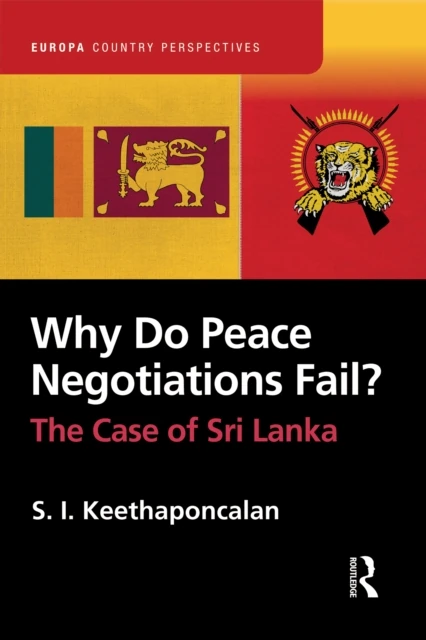
Why Do Peace Negotiations Fail?
The Case of Sri Lanka

Peace negotiation is one of the cornerstones of peacemaking praxis and a central theme in peace studies and international conflict resolution.
Many peace negotiations collapse without producing an agreement to resolve the conflict, and thus the failure of peace negotiations is a crucial research problem. However, it is one that remains severely understudied.
This study examines why peace negotiations fail, using Sri Lanka as the case study.
Four civil war peace negotiations are examined: (1) the Thimphu Talks; (2) the Hilton Talks; (3) the hybrid negotiations (1994-95); and (4) the Norway-facilitated process. The cases include bilateral and third party-assisted negotiations. All four processes failed.
The volume examines and analyses the factors primarily contributing to these failures, which include the deep commitment of political parties to their causes, confidence in military victory and the desire to use peace talks as a strategic tool. Moreover, it investigates the acceleration of failure owing to sudden shifts in the conflict system, violence during peace talks and the imposition of a third-party agenda.
The volume aims to provide further insight into the theoretical debate on peacemaking and, with regard to peacemaking practice, a better understanding of why peace negotiations fail could help third-party interveners to adjust their strategies.
The book is a valuable resource for students, academics and researchers interested in peace, conflict and civil war studies, and in Sri Lanka and South Asia.