$60.99
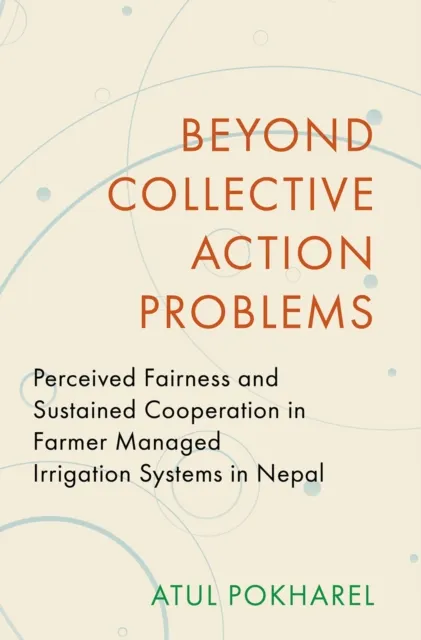
Beyond Collective Action Problems
Perceived Fairness and Sustained Cooperation in Farmer Managed Irrigation Systems in Nepal

Human history and shared infrastructure
Human history is full of examples of continuously maintained shared infrastructure. Our ability to survive and prosper depends on cooperation at some level, from the irrigation systems that enabled ancient humans to abandon their nomadic lifestyle to the free and open-source software that undergirds the internet. Thus, understanding the conditions under which community governance can be both equitable and sustainable is of critical importance to scholars and policymakers alike.
Beyond Collective Action Problems
Atul Pokharel argues that sustained cooperation depends on user perceptions that the cooperative arrangement is fair. Pokharel elaborates a different way to think about sustained cooperation over decades, based on a follow-up of 233 long-running community managed irrigation systems in Nepal--the same cases that were used to understand how groups can overcome collective action problems. Covering nearly forty years of history through these cases, Pokharel introduces the idea of fairness problems to capture the many forms in which the perceived fairness of a form of governance comes to matter to continued cooperation.
As he shows, the longer individuals cooperate, the more they become aware of how far their cooperative arrangement has diverged from the initial promise of fairness. This perception of fairness affects their commitment to maintaining the shared resource and participating in the institutions for governing it.
Fairness and sustained cooperation
Highlighting why eventually perceived fairness matters to sustained cooperation, this book illustrates how the fairness problem underlies successful cooperation over time, making it necessary to look beyond collective action problems.