$26.49
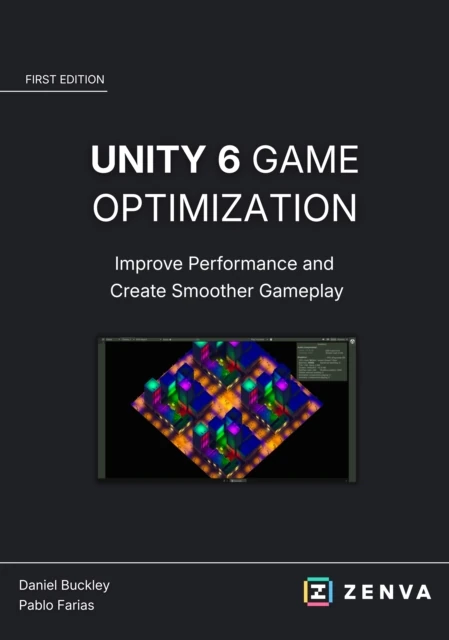
Unity 6 Game Optimization
Improve Performance and Create Smoother Gameplay

Diagnose and fix Unity 6 performance problems with a measurement-driven workflow
Use the Profiler, Frame Debugger, batching, lighting, LOD, and occlusion culling to validate smoother and more efficient gameplay.
Key Features
Measurement-first guidance connects baselines, profiling evidence, changes, and verified gains
Tool-focused context explains why the Profiler and Frame Debugger reveal real bottlenecks now
Complete Unity challenges show how rendering, lighting, LOD, and culling improve gameplay well
Book Description
Reliable optimization starts with evidence rather than guesswork. The opening material shows how common Unity problems affect frame rate, then establishes a baseline and uses the Profiler and Frame Debugger to reveal where processing and rendering time are being spent in Unity 6.3 LTS.
Readers then address the bottlenecks that matter. Static batching reduces draw calls, lighting work compares real-time and baked options, and Level of Detail and occlusion culling prevent unnecessary rendering. Every change is tied back to measurement so improvements can be confirmed instead of assumed.
By the end of this guide, readers can move from diagnosis through implementation and validation in a repeatable optimization workflow. A hands-on challenge, complete Unity project files, and full C# source code provide a practical foundation for improving performance in their own games.
What you will learn
Identify common Unity performance pitfalls
Profile bottlenecks with Unity tools
Reduce draw calls through static batching
Optimize real-time and baked lighting
Apply LOD and occlusion culling
Measure gains against a performance baseline
Who this book is for
Unity developers who can build scenes and want to diagnose performance issues with practical, measurable techniques. The material is valuable for game programmers, technical artists, and indie developers using the Profiler, Frame Debugger, static batching, lighting, LOD, occlusion culling, and baseline comparisons.