$63.99
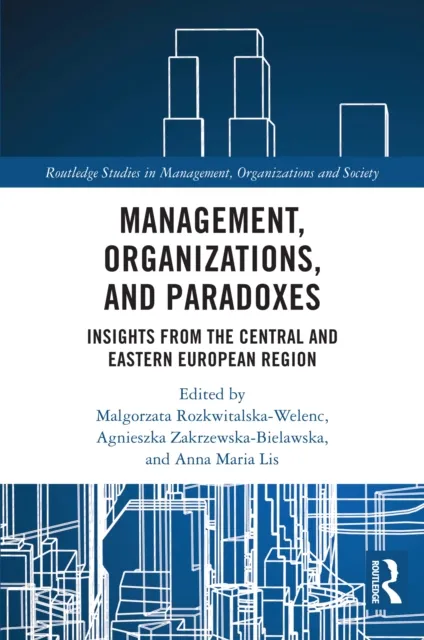
Management, Organizations, and Paradoxes
Insights from the Central and Eastern European Region

Introduction
Paradoxical tensions are persistently inevitable in today’s complex organizational world. Therefore, managers should perceive them as a lens through which they see organizations and work through them. Reconciling paradoxes requires understanding their nature and appraising them. It also involves novelty and creativity in implemented tactics. Thus, to help managers navigate dualities and contradictions in their organizations, Management, Organizations, and Paradoxes presents a comprehensive overview of implementing the paradox theory from a distinct organizational standpoint in the Central and Eastern European (CEE) context. Beyond theoretical foundations, it integrates recent research findings and practical insights, providing rich knowledge for managing conflicting demands across diverse organizational dimensions. In addition, it unlocks new insights that can enrich academic discourse and guide practitioners in embracing a paradox mindset. It develops less-explored areas, such as paradox regarding sustainability in clusters, or digital and energy transition. It also explores paradox in human resource management, workplace learning, diversity, equity, and inclusion policy. It tests whether paradoxes have regional variation and provides insight from managerial practices in CEE. The authors prove that organizations embracing paradox can expand the scope of their opportunities and thrive.
Target Audience
This monograph can serve as a scholarly guide for managers, academics, and Ph.D students, encouraging them to analyze and manage organizations from a paradox angle.