$32.99
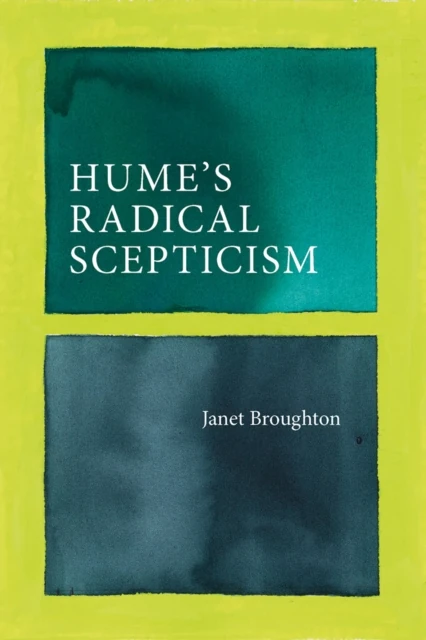
Hume's Radical Scepticism

Hume's Radical Scepticism
Janet Broughton parts ways with current scholars who see Hume primarily as a naturalist philosopher pursuing the “science of man.” Instead, she argues, Hume is a radical sceptic. Attending to Hume's literary strategies in A Treatise of Human Nature, she uncovers the philosophical significance of narration, irony, and what she calls “subjectivizing.”
Features of Hume's Investigations
Broughton begins by tracking two broad features of Hume's investigations. One is the status of the commonsense assumption that we have a large body of justified and true beliefs about the world around us. The other is the status of the cognitive norms of clarity, consistency, and evidence. She argues that Hume cedes great authority to the commonsense assumption and does not challenge it in the first three parts of the Treatise's first book. The negative arguments of those parts, she contends, are deflationary in character, not sceptical. But Broughton also argues that in Part 4, where Hume examines our beliefs in the world of physical objects, his unwavering adherence to the cognitive norms forces him to reject the commonsense assumption.
Hume's Attitude and Literary Features
Still, how could Hume maintain that we have no good reason for making the commonsense assumption that we all make about the world? The view seems untenable for any sane person, and it seems especially untenable for Hume, who goes on to make many claims about the world as he investigates the passions and morals in Books Two and Three of the Treatise. Here is where Broughton's attention to the literary features of Hume's work comes to the fore. It enables her to describe an attitude of ironic detachment that, she argues, permeates his commitment to the truth of scepticism.
Conclusion
In this exciting new book, Broughton offers a brand new way to interpret one of the most important figures in the history of philosophy.