$75.99
$120.99
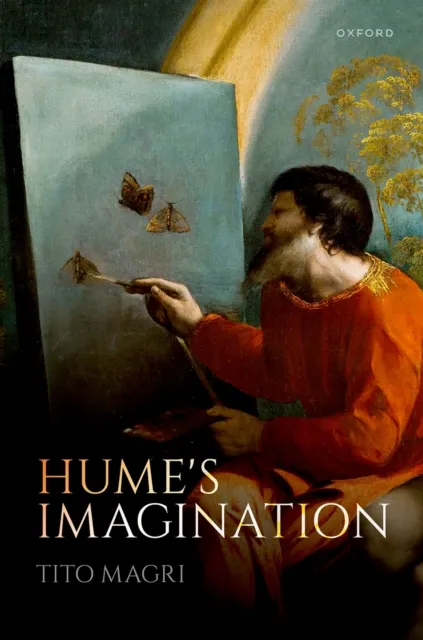
Hume's Imagination

Introduction
This book proposes a new and systematic interpretation of the mental nature, function and structure, and importance of the imagination in Book 1, ''Of the Understanding'', of Hume''s Treatise of Human Nature. The proposed interpretation has deeply revisionary implications for Hume''s philosophy of mind and for his naturalism, epistemology, and stance to scepticism. The book remedies a surprising blindspot in Hume scholarship and contributes to the current, lively philosophical debate on imagination. Hume''s philosophy, if rightly understood, gives suggestions about how to treat imagination as a mental natural kind, its cognitive complexity and variety of functions notwithstanding.
Hume's View of Imagination
Hume''s imagination is a faculty of inference and the source of a distinctive kind of idea, which complements our sensible representations of objects. Our cognitive nature, if restricted to the representation of objects and of their relations, would leave ordinary and philosophical cognition seriously underdetermined and expose us to scepticism. Only the non-representational, inferential faculty of the imagination can put in place and vindicate ideas like causation, body, and self, which support our cognitive practices.
Development of the Naturalist Inferentialism
The book reconstructs how Hume''s naturalist inferentialism about the imagination develops this fundamental insight. Its five parts deal with the dualism of representation and inference; the explanation of generality and modality; the production of causal ideas; the production of spatial and temporal content, and the distinction of an external world of bodies and an internal one of selves; and the replacement of the understanding with imagination in the analysis of cognition and in epistemology.