$94.99
Forging a British World of Trade
Culture, Ethnicity, and Market in the Empire-Commonwealth, 1880-1975

Brexit and Britain's Economic Orientation
Brexit is likely to lead to the largest shift in Britain's economic orientation in living memory. Some have argued that leaving the EU will enable Britain to revive markets in Commonwealth countries with which it has long-standing historical ties. Their opponents maintain that such claims are based on forms of imperial nostalgia which ignore the often uncomfortable historical trade relations between Britain and these countries, as well as the UK's historical role as a global, rather than chiefly imperial, economy.
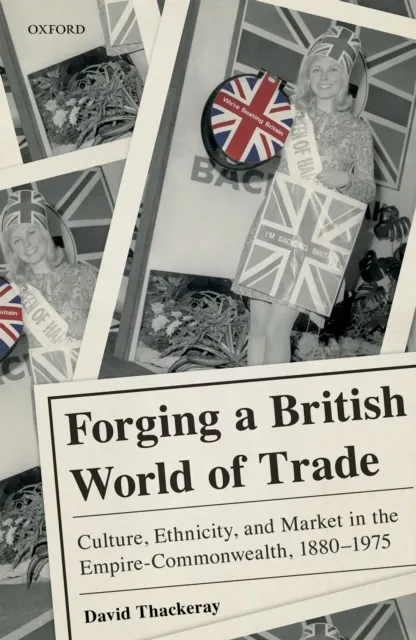
Forging a British World of Trade
explores how efforts to promote a British World system, centred on promoting trade between Britain and the Dominions, grew and declined in influence between the 1880s and 1970s. At the beginning of the twentieth century many people from London, to Sydney, Auckland, and Toronto considered themselves to belong to culturally British nations. British politicians and business leaders invested significant resources in promoting trade with Australia, Canada, New Zealand, and South Africa out of a perception that these were great markets of the future.
However, ideas about promoting trade between British peoples were racially exclusive. From the 1920s onwards, colonized and decolonizing populations questioned and challenged the basis of British World networks, making use of alternative forms of international collaboration promoted firstly by the League of Nations, and then by the United Nations. Schemes for imperial collaboration amongst ethnically British peoples were hollowed out by the actions of a variety of political and business leaders across Asia and Africa who reshaped the functions and identity of the Commonwealth.