$108.99
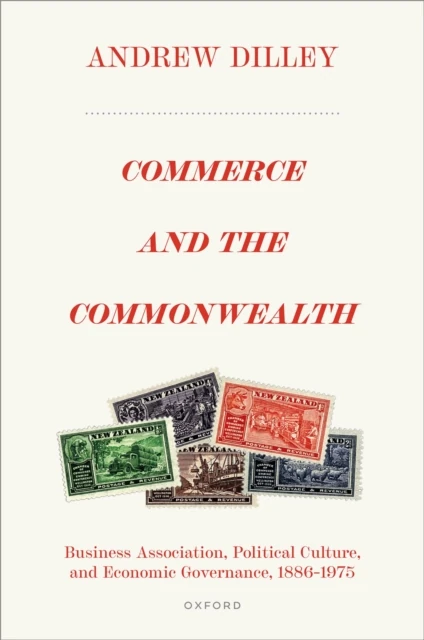
Commerce and the Commonwealth
Business Association, Political Culture, and Economic Governance, 1886-1975

The history of the Commonwealth of Nations has been subject to limited scholarly enquiry, confined to a focus on inter-governmental relations and divorced from the lively historiographies on the economics and business of the British Empire. Seeking to fill these gaps, Commerce and the Commonwealth presents a revisionist history of the intertwined political and economic histories of the British Empire and the Commonwealth of Nations. From the 1880s, a political and economic configuration within the British empire, the Empire-Commonwealth, played a powerful and distinctive role in the business of empire. Incoherently conceived, the Empire-Commonwealth centred on the UK and old dominions, neglecting and marginalizing the remainder of the empire. This Empire-Commonwealth ultimately gave way to, and folded into, the post-colonial Commonwealth of Nations--but continued to play important economic roles until the British Empire''s collapse after World War II.Eschewing state-focused approaches, Commerce and the Commonwealth tracks the history of the Empire-Commonwealth and Commonwealth of Nations through its business associations, and especially chambers of commerce which organized at imperial and then Commonwealth levels from 1886 to 1975. These associations, framed by a distinct Empire-Commonwealth political culture, sought to shape a wide spectrum of economic policy areas. Through these associations, the book offers a fresh account of the pan-imperial debate on imperial preference and explores other areas of imperial political economy including law, currency, transport and communications, emigration, defence, and taxation. It establishes the layered and subtle existence of tangible economic governance notwithstanding the ''ever closer disunion'' of the UK and dominions that lay at the Empire-Commonwealth''s core.The result is a wide-ranging and revisionist history of an under-studied element of the history of the British Empire that will be important reading for all those interested in modern British history, economic history, the history of empire, and the history of the Commonwealth and its legacies.