$69.99
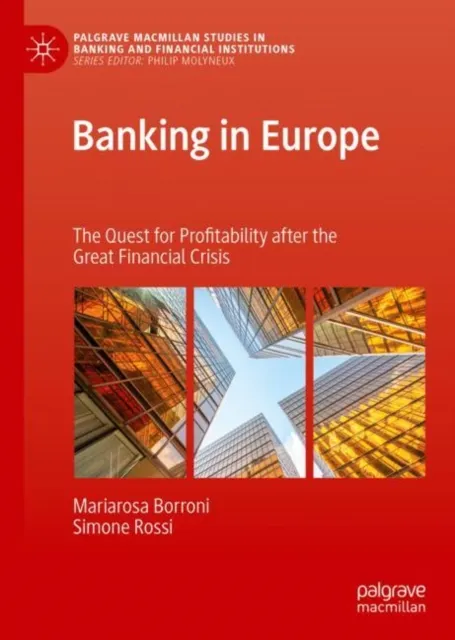
Bank Profitability and Interest Rates
An Endogenous Money Theory Perspective

Introduction
In recent years, many financial and monetary issues have been clarified and explained by the post-Keynesian theory, but some open questions remain on the functioning of the bank and the role of bank profitability in interest rate determination and distributive conflict.
Banking Production Cycle
The book identifies a banking production cycle and thus clarifies the role of deposits, loans and capital for the (single) bank from a post-Keynesian endogenous money perspective. This analysis makes it possible to include deposits among the inputs and loans among the outputs of the banking sector. The book also discusses the extent to which the concept of normal capacity utilisation can be transferred to the banking sector. Like any other productive sector, the bank must obtain a profit rate on invested capital that can be considered normal. This factor makes it possible to develop a Sraffian-type price equation for the banking sector, where the interest rate is ultimately determined by the normal profit rate.
Distributional Effects and Monetary Theory
Finally, the book aims to investigate the compatibility between the monetary theory of distribution and the ideas developed in the book itself, assessing whether this newly elaborated approach is more or less able to describe the distributional effects of both the zero (or negative) interest rates following the financial crisis and their sudden rise in recent years, also taking into account the more direct relationships between interest rates and wages.
Target Audience
The book will appeal to readers who wish to explore post-Keynesian, classical-Keynesian and Marxian approaches to financial and monetary issues.