$74.99
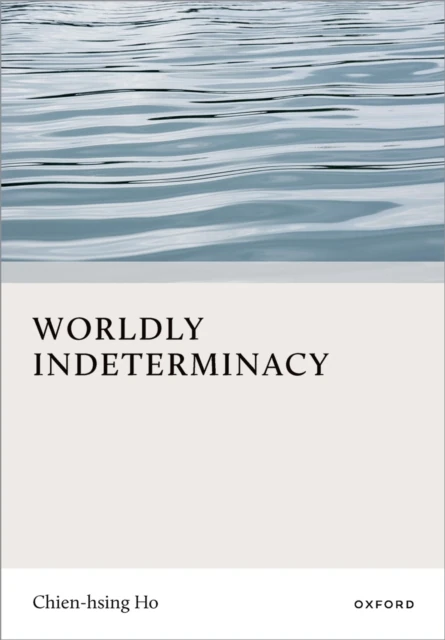
Worldly Indeterminacy

This is an open access title available under the terms of a CC BY-NC-ND 4.0 licence. It is free to read at Oxford Scholarship Online and offered as a free PDF download from OUP and selected open access locations. Is the world itself indeterminate? Since the turn of the twenty-first century, analytic philosophy has gradually moved toward recognizing indeterminacy-or more narrowly, vagueness-not merely as a feature of language or thought, but as a genuine feature of reality itself. In Worldly Indeterminacy Chien-hsing Ho provides an original and comprehensive framework to support and reinforce this shift. Ho develops a systematic theory, termed "e;ontic indeterminacy,"e; that addresses semantic, logical, and applicational issues while demonstrating the potential for indeterminacy to permeate all aspects of reality. Whereas many analytic accounts conceive of worldly indeterminacy as a meta-level phenomenon or even a defect of the world, Ho offers a robust alternative. He views indeterminacy as an expression of the world's constitutional plenitude and models it at the object level in a way consonant with its deep-rooted character. Set within the context of the analytic tradition, his book adopts a "e;fusion philosophy"e; approach by synthesizing Chinese Madhyamaka Buddhist thought with contemporary analytic metaphysics. The result is a unique cross-cultural exploration and a significant contribution to contemporary debates. By incorporating Buddhist perspectives, Worldly Indeterminacy expands conceptual horizons for analytic philosophers, challenging certain presumptions and limitations of mainstream Western philosophy. Ultimately, it reveals the contemporary implications of Madhyamaka thought and demonstrates the power and promise of cross-cultural philosophical engagement.