$32.99
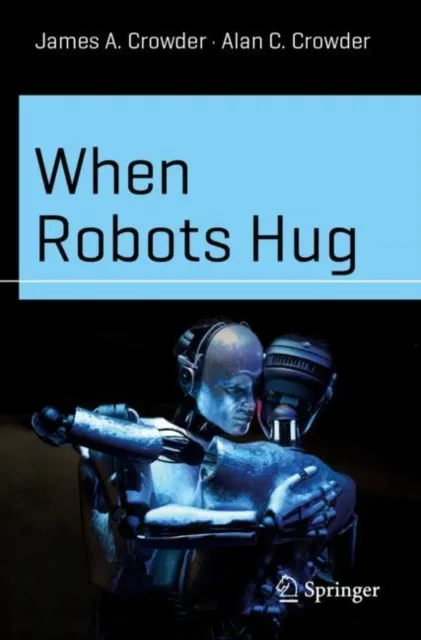
When Robots Hug

By 2027, it had been seven years since the scientists’ sea-changing research on artificial psychology and robotics.
The work debuted around the same time as Large Language Model Chatbots, and the power of the integration of the two technologies put many industries in a tailspin. The commercial and defense industries especially were still scrambling to regulate their use in research and universities. The sought-after scientists signed with DARPA to build reliable and secure AI entities, but the agency grew fearful of the technology’s power and ultimately decided it was too dangerous to bring to market and demanded the scientists destroy the work. The researchers couldn’t bring themselves to discard 20 years of research, so instead sent the entities to various research labs around the world. But unbeknownst to them, each AI-entity embraced its new home, growing, adapting, evolving, and ultimately connecting beyond what the researchers could envision.
In the end, as the scientists catch up to each one, they realize the entities have discovered a very human means of interacting: the power of physical contact; and not physical contact between humans and technology, but physical contact between robotic entities. And with this discovery, the entities join forces to only grow stronger. This development ushers in a new paradigm where the difference between AI-entities and human entities becomes less and less discernible.
All the AI and robotic science featured in the book is real; the story line is fictional, but with how fast innovation moves, it’s not hard to envision.