$62.99
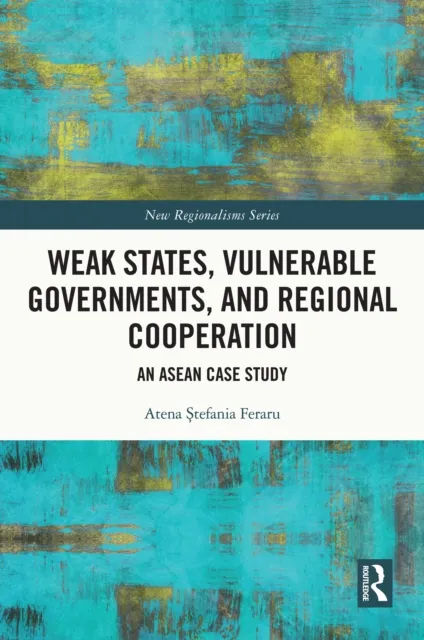
Weak States, Vulnerable Governments, and Regional Cooperation
An ASEAN Case Study

Introduction
War, famine, poverty, organized crime, environmental catastrophes, refugees, epidemics and pandemics, modern slavery – all these affect people in the non-Western world to an increasingly disproportionate extent. It is also where wealthy governments wield economic leverage and military force to renegotiate existing norms of international relations. Under these circumstances, it is difficult to overestimate the importance and urgency of comprehending the mechanisms and motivations driving these phenomena.
Research Focus
This book is the outcome of a decade-long effort to advance both theoretical and empirical understanding of what motivates non-Western governments’ decisions to cooperate/not cooperate regionally. It starts by acknowledging the Western-centrism of prevailing international relations theories, abandoning deeply entrenched assumptions regarding the nature and roles of states, and redefining state weakness. The inquiry continues by elaborating this new concept and applying it to Southeast Asian polities while positing that it creates governments vulnerable to internal and external threats, in line with Joel S. Migdal’s well-known findings on the topic. A set of regional cooperation strategies is then inferred, based on the survival needs of insecure governing elites and its empirical validity is tested against the experience of regional organizations in Africa, Asia, and the Americas.
Analysis of Southeast Asian Cooperation
The second part of the book provides an in-depth examination of how Southeast Asian governments’ shared security needs and interests shaped the emergence of the identified regional cooperation pattern and its evolution over 50 years of cooperation within the Association of Southeast Asian Nations (ASEAN). Overall, this book is a call to international relations scholars to do our part in understanding non-Western experiences and making a substantive contribution to addressing humanity’s most intractable security threats.