$172.99
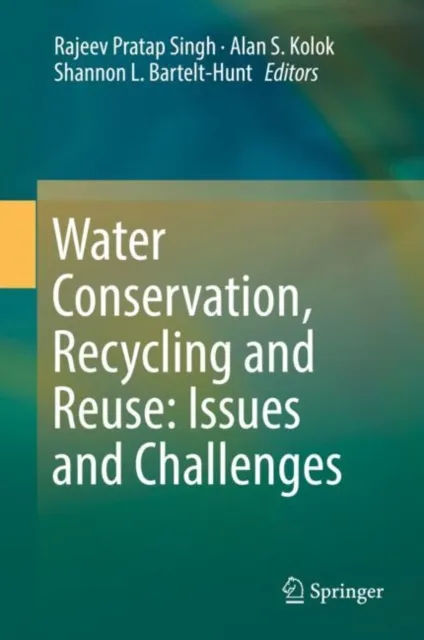
Water Conservation, Recycling and Reuse: Issues and Challenges

Water and Global Sustainability
Water - a basic element of life, livelihood, food security and sustainable development - holds the key to global sustainability. The global water demand has been increased 3-fold in the past five decades and only 0.4% of the total world’s fresh water resources is available and accessible for use. The United Nations projected that half of all countries will face water scarcity by 2025 and more than one-third of the world’s population could be affected by water stress by 2050. The water problem is rapidly intensifying in the Asian region, and around 700 million people do not have access to safe drinking water. Similarly, according to the Intergovernmental Panel on Climate Change (IPCC) report, by 2050, more than one billion people in Asia alone are projected to experience negative impacts on water resources as a result of climate change. Climate change is also putting extra pressure on and adversely affecting the global water cycle, leading to irregular precipitation, more floods and droughts and creating an imbalance between water supply and demand. The availability of safe water is a major global concern due to the rapidly increasing population, urbanization, unsustainable consumption patterns, and rapid shifts in land use. It is believed that reduced access to freshwater will have cascading consequences that will pose threat to global food security, livelihood security, and cause large scale migration and economic and geopolitical tensions. As such, strategies for water conservation, wastewater reuse and recycling should be adopted in order to lessen the gap between supply and demand for water for different activities. This book provides readers with a better understanding of the water security challenges, and presents innovations to address these challenges, strengthen the science-policy interface, and develop institutional and human capacities for water security and sustainability.