$243.99
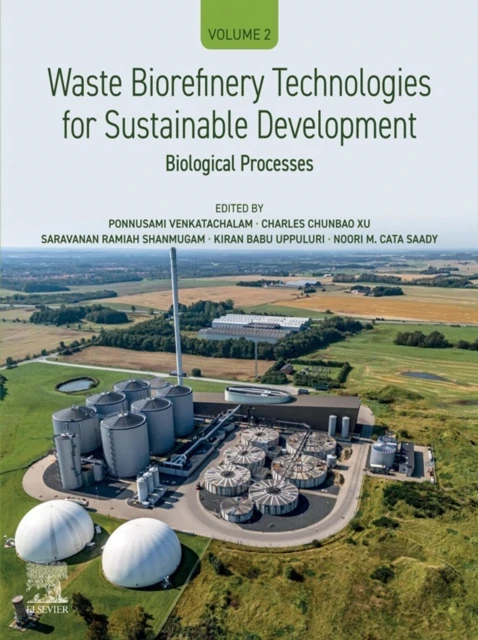
Waste Biorefinery Technologies for Sustainable Development
Volume 2: Biological Processes

Waste Biorefinery Technologies for Sustainable Development: Volume 2: Biological Processes
Deals with the intersection of circular economy principles and biorefinery innovation, exploring how biorefineries can play a central role in closing the loop of resource use and promoting sustainable development.
Through a comprehensive examination of circular economy concepts and biorefinery technologies, it illustrates how waste streams can be valorized and transformed into valuable products through efficient and sustainable processes.
From organic wastes to agricultural residues and industrial by-products, it covers how diverse biomass feedstocks can be utilised within circular biorefinery systems to produce bioenergy, biochemicals, biomaterials, and bioplastics.
The volumes cover the basic components of biorefineries and various approaches required for the valorization of versatile feedstocks which make an indispensable resource for (under)graduate students.
The discussion of role of biorefineries in addressing global challenges such as climate change and resource depletion, current research trends, and future directions offers valuable guidance for researchers seeking to deepen their understanding and identify opportunities for further investigation.
Volume 2 of this two-volume set deals with biological processes, and includes biochemical paths for converting biomass into bioproducts and biofuels, model refinery processes, recent trends and future prospects of circular biorefinery and their life cycle analysis, and future perspectives.
Key Topics
Biomass preprocessing and pretreatment, thermochemical conversion routes, and biochemical conversion routes
Circular bioeconomy principles and life cycle assessment
Challenges and opportunities in biorefineries