$33.99
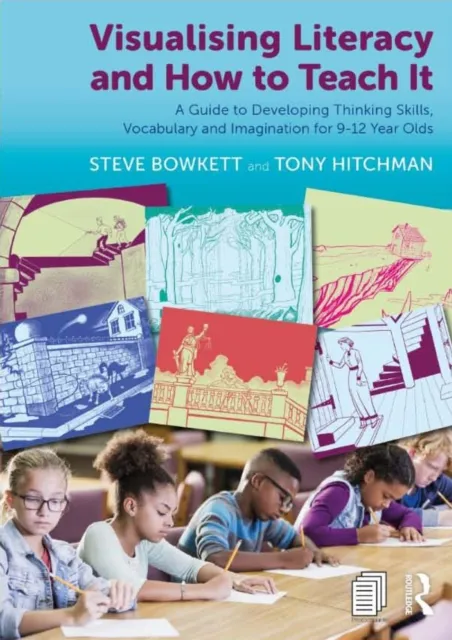
Visualising Literacy and How to Teach It
A Guide to Developing Thinking Skills, Vocabulary and Imagination for 9-12 Year Olds

Visualising Literacy and How to Teach It
Technological advances and the way young people interact with them means children are thinking and processing information in an increasingly visual manner. Visualising Literacy and How to Teach It recognises that many, if not most, children are attracted to visual images and uses this as a basis for introducing and developing a range of thinking skills and strategies for learning. This practical resource offers a selection of visuals, each accompanied by activities that give children practice in using their imaginations in different ways.
Visualising Literacy and How to Teach It not only explores creative and critical thinking skills but also pays close attention to the overarching thinking skill that we call imagination. The book contains around 150 practical activities that develop children’s imaginations, focussing on a range of thinking skills, including but not limited to the following:
Developing observational/attentional skills
Noticing details (focussing of attention)
Assimilating visual information
Increasing experience of inferential thinking, speculation, dealing with generalisations
Boosting vocabulary
Empowering one’s attitude towards exploring ideas
Learning different questioning techniques
Increasing the ability to empathise
Becoming comfortable with uncertainty and ambiguity
Many of the visualisation techniques can be applied to developing different aspects of emotional resourcefulness, including empathy, positive self-image, anchoring positive thoughts and modifying negative thoughts and feelings. This is, therefore, an essential resource for any teacher or education professional who is keen on developing children’s ability to think and express their own ideas.