$71.99
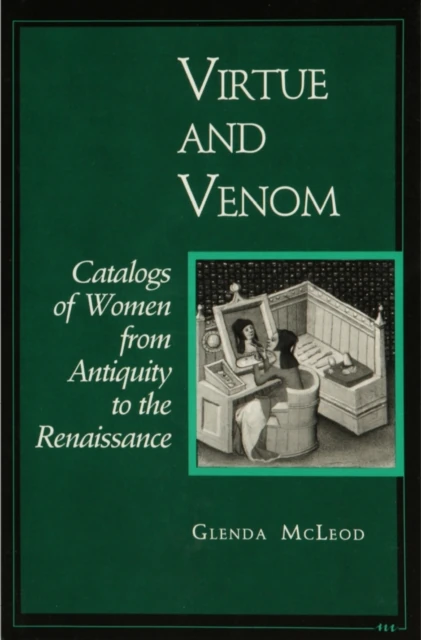
Virtue and Venom
Catalogs of Women from Antiquity to the Renaissance

Virtue and Venom
traces the history of a previously neglected genre, the catalog of women, from its origins in Greece and Rome to the late Middle Ages, revealing the catalogs’ considerable importance as cultural documents of the evolution of the Western definition of womankind. These catalogs were simple listings of past heroines, sometimes described in extended biographies, sometimes merely enumerated by name. Catalog heroines often appeared in familiar guises—anonymous mothers of great men, fascinating seductresses, self-effacing spouses, abused victims of love, strong and brilliant achievers. Writtten by some of the finest authors of the ages, the catalogs fulfilled important functions. By defining women typologically, they instilled stereotypes in the popular mind, and by illustrating proper and improper feminine conduct they reinforced the late medieval link between literature and ethics. Despite the repetitive form of the genre, the catalogs were extremely flexible, able to illustrate different, even antithetical views of femininity—invoking the past as authority or reinterpreting the past in an attempt to associate femininity with changing cultural values. Thus, as well as being the vehicle for the transmission of knowledge, the form could also be manipulated to contest authority, in the guise of invoking it, and present new paradigms. McLeod examines a host of catalogs, including those of Homer, Hesiod, Vergil, Ovid, Juvenal, Plutarch, St. Jerome, and Jean de Meun, but gives special attention to Boccaccio’s De claris mulieribus and Chaucer’s Legend of Good Women. She then shows how the tradition ultimately produced the first major defense of womankind in Christine de Pizan’s Cité des Dames. This book will be of interest to classicists, medievalists, Renaissance and feminist scholars, and anyone interested in the misogynist tradition in the West and the response it engendered.