$136.99
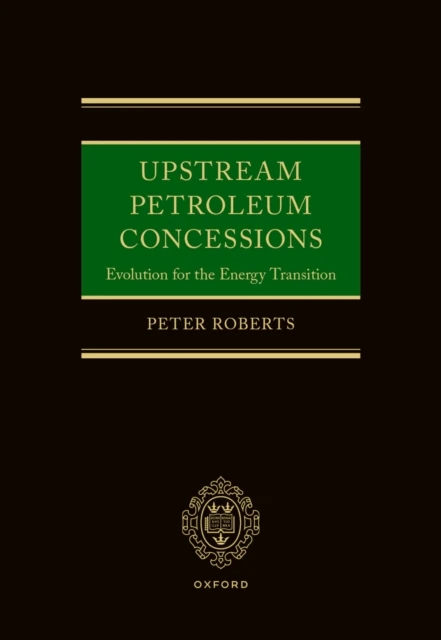
Upstream Petroleum Concessions
Evolution for the Energy Transition

Introduction
For the last seventy years, upstream petroleum concessions have been granted worldwide by states to investors, in order to facilitate petroleum exploration and production for the state's benefit, but at the investor's risk and expense. This process has had to evolve in order to accommodate the increasing transition to net zero carbon forms of energy. This book examines the use of petroleum concessions, provides a guide to how they are granted, and how they could develop to accommodate the energy transition.
Part A
Part A focuses on the relationship between the existing forms of concessions and the transition to net zero carbon emissions. It considers the logic from nation states for the use of concessions by states, as well as the form and mechanics for awarding them. Later chapters assess the impact of the transition to net zero carbon emissions, the risks which it presents to states and investors, alongside examples of state-sponsored withdrawals from future petroleum exploration and production.
Part B
Part B offers a guide to the typical content of concessions. It examines the concession's scope, duration, area and how it is modified. The obligations and required standards of both the investor and the state are considered, as well as the fiscal terms (including taxation) and non-fiscal benefits which can accrue to the state under any deal, before considering any constitutional provisions included within the concession.
Part C
Part C concludes by theorising how the mechanics and award of current and future concessions could be modified by a state, how clean gas commercialisation could be better promoted, and how the role of the state's national oil company could be utilised to better position the state to manage the energy transition.