$5.29
Upon This Rock, Revival of the Five-Fold Ministry

Upon This Rock I will Build My Church
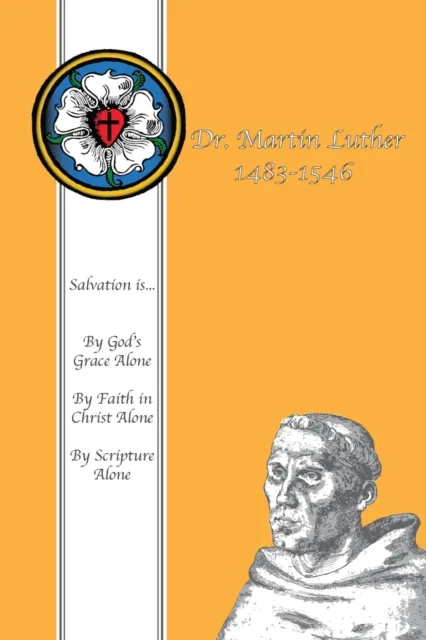
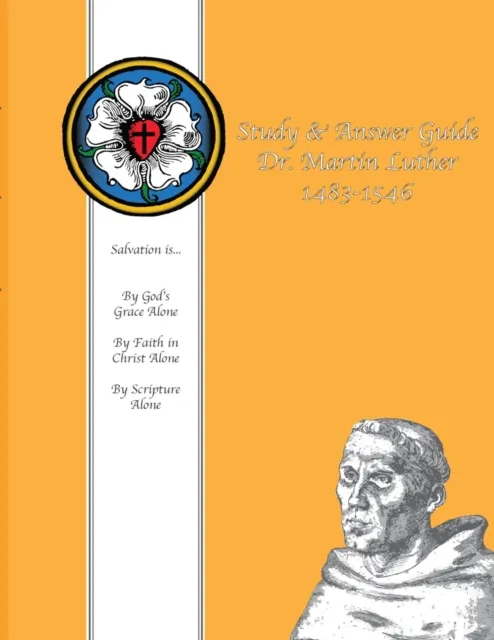
Jesus says in Matthew 16:18, And I say also unto thee, that thou art Peter, and upon this rock I will build my church; and the gates of hell shall not prevail against it. It was this divine revelation of Jesus being the Christ (Messiah, Anointed One), Son of the Living God, which gave Peter access to the keys of the kingdom. It is by this same revelation that a young monk named Marin Luther would declare and understand that the just shall live by faith, thus beginning a reformation of the church.
This book is designed to continue the process of reformation, as in the 16th Century, where a partial reformation began to take place. Martin Luther, who we now realize was a prophet in his own right, was given a doctorate of theology at the University of Wittenberg (Germany) by the Elector Frederick, Duke of Saxony. This degree Staupitius was conferred upon him in October 1512. This divine revelation caused him to speak boldly against certain indulgences, such as one could buy a soul from purgatory for ten shillings and not a farthing less. This indulgence was pre-fabricated in pretense by Pope Leo X, who succeeded Julius II. This Pope Leo X imposed such ridiculous practices on the pretense of raising money for war against the Turks.
Martin Luther began to oppose the Pope, much like a latter-day Amos, who came to Bethel and heralded against King Jeroboam, King of Israel, and Amaziah, the Priest of Bethel. This prophet, Martin Luther, began the genesis of reformation. He was also the first to translate the New Testament into the German language, completed in September 1522. He studied the works of Desiderius Erasmus, who prepared important new Latin and Greek editions of the New Testament. Martin Luther finished the Pentateuch in 1523, thus completing the entire Bible and publishing it in 1530.
As we examine history, we find that Martin Luther was a step ahead of William Tyndale. His great defiance was enacted as he nailed the 95th Thesis of Contention to the Wittenberg church door, declaring his intolerance against the Roman Catholic corruption on Halloween night 1517. Martin Luther died of natural causes although he was branded a heretic by the Catholic Church. William Tyndale was not so lucky, and was burned at the stake in the public square in 1596.
Upon This Rock, Revival of the Five-Fold Ministry
As we examine church history, we see a clear picture of martyrdom. Men like John Wycliffe, called the morning star of the Reformation era, who 200 years prior criticized abuses and false teachings in the Catholic Church. Yes, John Wycliffe, a professor at Oxford University, was expelled from his teaching position by the Pope, who also exhumed his bones and had them burned after his death. This is the price of Reformation.
Let us briefly examine John Huss, using Foxes Book of Martyrs as our source. John Huss was chosen as the pastor of the Church of Bethlehem in Prague. He also held a position as the Dean of Students and Rector at the University. Along with John Wycliffe, he was known as a pre-reformer. His teaching and revelation upset the pope, and he was also burned at the stake like so many spirit-filled saints of the time period. It is noted in historical data that John Huss was heard singing in the midst of the flames as he went on to glory.