$146.99
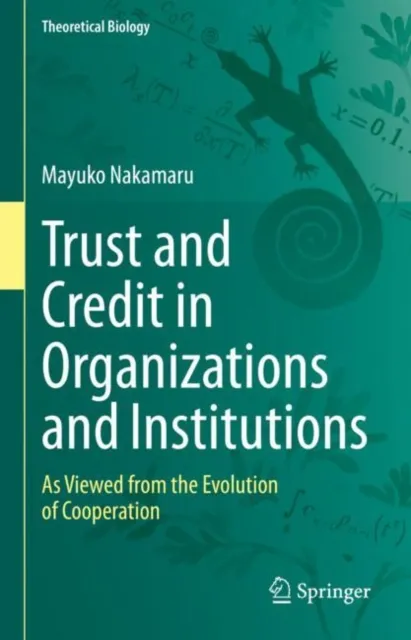
Trust and Credit in Organizations and Institutions
As Viewed from the Evolution of Cooperation

Introduction to Evolutionary Game Theory and Organizations
This book shows that evolutionary game theory can unravel how mutual cooperation, trust, and credit in a group emerge in organizations and institutions. Some organizations and institutions, such as insurance unions, credit unions, and banks, originated from very simple mutual-aid groups. Members in these early-stage mutual-aid groups help each other, making rules to promote cooperation, and suppressing free riders. Then, they come to trust not only each other but also the group they belong to, itself.
Division of Labor and Trust in Larger Groups
The division of labor occurs when the society comes to have diversity and complexity in a larger group, and the division of labor also requires mutual cooperation and trust among different social roles. In a larger group, people cannot directly interact with each other, and the reputation of unknown people helps others decide who is a trustworthy person. However, if gossip spreads untruths about a reputation, trust and cooperation are destroyed. Therefore, how to suppress untrue gossip is also important for trust and cooperation in a larger group. If trustworthiness and credibility can be established, these groups are successfully sustainable. Some develop and evolve and then mature into larger organizations and institutions. Finally, these organizations and institutions become what they are now. Therefore, not only cooperation but also trust and credit are keys to understanding these organizations and institutions.
Application of Evolutionary Game Theory
The evolution of cooperation, a topic of research in evolutionary ecology and evolutionary game theory, can be applied to understanding how to make institutions and organizations sustainable, trustworthy, and credible. It provides us with the idea that evolutionary game theory is a good mathematical tool to analyze trust and credit. This kind of research can be applied to current hot topics such as microfinance and the sustainable use of ecosystems.