Currently not available in the United States
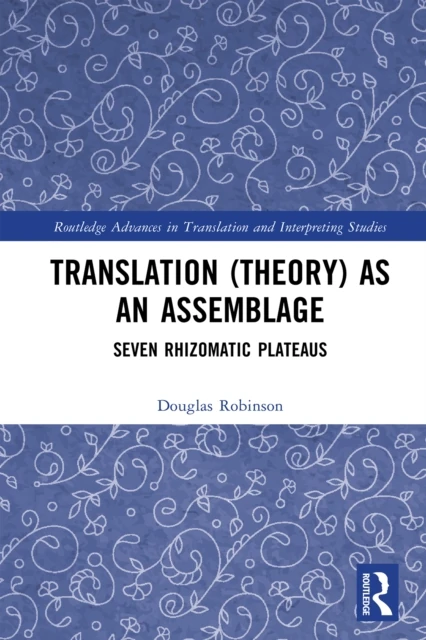
Translation (Theory) as an Assemblage
Seven Rhizomatic Plateaus

Introduction
This experimental book on translation borrows its title and methodology from the introduction to Deleuze and Guattari's A Thousand Plateaus. As they theorize it, an assemblage (French agencement) works through a complex socio-material network characterized by fluidity, exchangeability, and connectivity. They contrast the assemblage with what they call the "e;root-tree,"e; which is rooted in stable ontological soil and issues forth into tidy binaries: one becomes two, two becomes four, and so on.
Assemblage and Rhizome
An assemblage is not simply the kind of postmodern form of allegory or analogy where what points beyond itself to "e;reality"e; is not a fictional story or image but what Kenneth Burke called "e;perspectives by incongruity."e; Rather, whatever "e;pointing"e; an assemblage does is radically local and shifting, or what Deleuze and Guattari call rhizomatic. A rhizomatic assemblage (dis)organizes people, events, and the planes on which they occur, and the speeds at which they occur, through a nonlinear network that is constantly in motion.
Robinson's Approach
Robinson reads Franz Kafka (and other authors) and their translations in kaleidoscopic snippets that work as temporary mappings rather than stable calques-tiny fleeting ways or moments of looking at or feeling one's way into or otherwise experiencing translingual address. That orientation makes this book experimental, and the types of translation (theory) that Robinson explores in it experimental as well.
Intended Audience
It will be of interest to graduate students and professors of translation and comparative world literature, those interested in modernist, experimental, or avant-garde fiction, and those who also do literary and scholarly translation.