$60.99
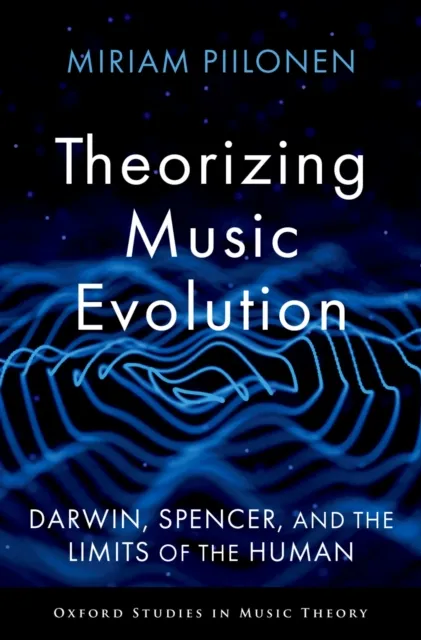
Theorizing Music Evolution
Darwin, Spencer, and the Limits of the Human

What did historical evolutionists such as Charles Darwin and Herbert Spencer have to say about music?
Charles Darwin viewed music as a kind of proto-language common to humans and animals alike; he heard the songs of birds and the chirps of mice as musical, as articulated in texts such as The Descent of Man (1871) and The Expression of the Emotions in Man and Animals (1872). Herbert Spencer, on the other hand, saw music as a specifically human stage of evolutionary advance, beyond language acquisition, as outlined in his essay, "The Origin and Function of Music" (1857).
What role did music play in their evolutionary theories?
Music served as a boundary-drawing device, used to trace or obscure the conceptual borders between human and animal. Darwin's perspective linked music to a shared evolutionary origin with animals, while Spencer's view positioned music as a distinct, advanced stage in human cultural evolution.
What were the values and limits of these evolutionist turns of thought, and in what ways have they endured in present-day music research?
These perspectives established radically different views on the origin and function of music, shaping debates about human uniqueness and animal communication. Their ideas continue to influence contemporary research by providing historical frameworks that inform interdisciplinary approaches to understanding music's evolution and its role in human culture.