£74.50
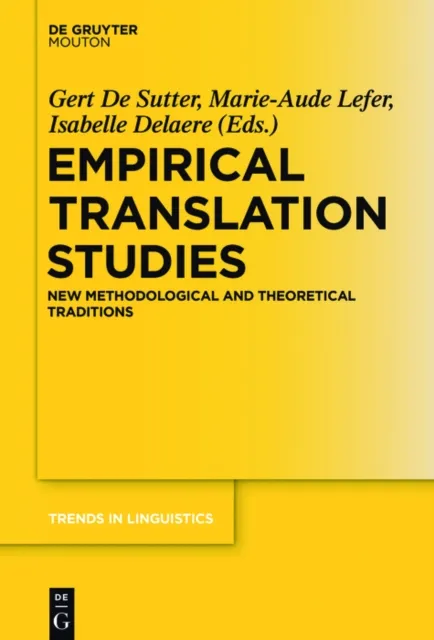
Textual and Contextual Analysis in Empirical Translation Studies

Introduction to Empirical Translation Studies (ETS)
This book presents the state-of-art research in ETS by illustrating useful corpus methodologies in the study of important translational genres such as political texts, literature and media translations. Empirical Translation Studies (ETS) represents one of the most exciting fields of research. It gives emphasis and priority to the exploration and identification of new textual and linguistic patterns in large amounts of translation data gathered in the form of translation data bases.
Features of Current ETS
A distinct feature of current ETS is the testing and development of useful quantitative methods in the study of translational corpora.
Case Study: Finnish Translation of Russian Political Genres
In this book, Hannu Kemppanen explores the distribution of ideologically loaded keywords in early Finnish translation of Russian political genres which yielded insights into the complex political relation between Finland and Russia in the post-Soviet era.
Case Study: Brazilian Fiction Translations
Adriana Pagano uses multivariate analysis in the study of a large-scale corpus of Brazilian fiction translations produced between the 1930s-1950s, which is known as the golden age of Latin American translation. The statistical analysis detected a number of translation strategies in Brazilian Portuguese fictional translations which point to deliberate efforts made by translators to re-frame original English texts within the Brazilian social and political context in the first three decades under investigation.
Case Study: Chinese Media Translation
Meng Ji uses exploratory statistical techniques in the study of recent Chinese media translation by focusing on three important media genres, i.e., reportage, editorial, and review. The statistical analysis effectively detected important variations among these three news genres, which are analyzed in light of the social and communicative functions of these news genres in informing and mobilizing the audience in specific periods of time in Mainland China.