$37.99
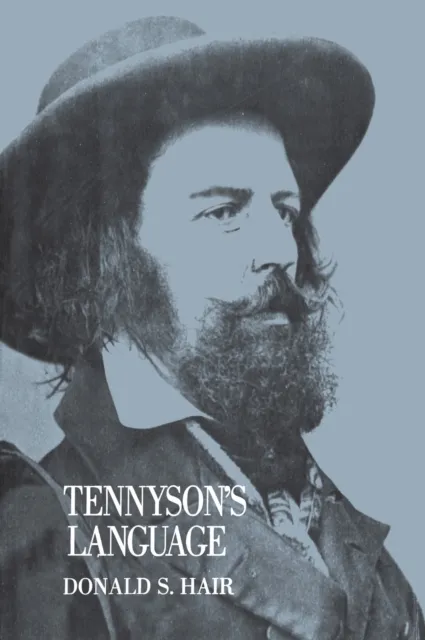
Tennyson's Language

Language and Tennyson
The study of language was central to the thinking of Tennyson and his circle of friends. The period of his education was a time of interest in the subject, as a new form of philology became widely known and accepted in Britain. In this study, Donald S. Hair discusses Tennyson’s own view of language, and sets them in the context of the language theories of his day.
The Scope of the Book
The scope of the book is broad. Hair draws upon a wide range of Tennyson’s poetry, from a quatrain he wrote at the age of eight to an ‘anthem-speech’ he wrote at the age of eighty-two, and pays particular attention to two major works: In Memoriam and Idylls of the King.
Theoretical Traditions
He explores these in relation to the two theoretical traditions Tennyson inherited. One is derived from Locke and the language theory set out in Book III of An Essay Concerning Human Understanding, the other from Coleridge and the language theory of what Mill called the ‘Germano-Coleridgian’ tradition. He goes back to Plato’s Cratylus and Aristotle’s On Interpretation, and forward to the continental philology introduced into England by Tennyson’s friends, Kemble and Trench, among others. Finally, he links Tennyson’s language to thinkers such as Whewell, Hallam, and Maurice, who are not in themselves philologists but who make language part of their concerns—and Whewell was Tennyson’s tutor, Hallam and Maurice his friends.
Contribution and Analysis
Hair offers a significant contribution to the development of linguistic theory in Britain while also providing some close readings of key passages of Tennyson’s work and examinations of the poet’s faith and views of society.