$32.99
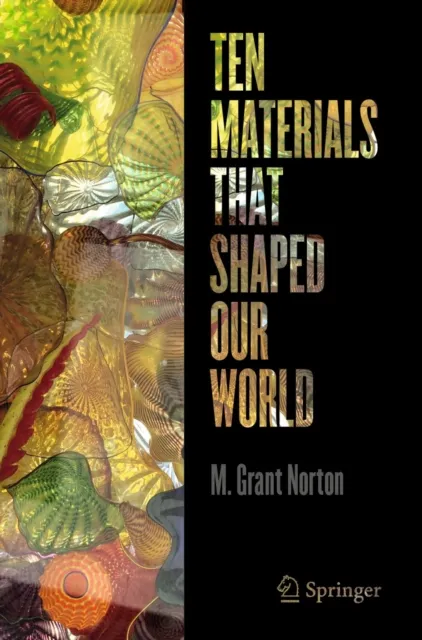
Ten Materials That Shaped Our World

This book examines ten materials—flint, clay, iron, gold, glass, cement, rubber, polyethylene, aluminum, and silicon—explaining how they formed, how we discovered them, why they have the properties they do, and how they have transformed our lives. Since the dawn of the Stone Age, we have shaped materials to meet our needs and, in turn, those materials have shaped us.
The fracturing of flint created sharp, curved surfaces that gave our ancestors an evolutionary edge. Molding clay and then baking it in the sun produced a means of recording the written word and exemplified human artistic imagination. As our ability to control heat improved, earthenware became stoneware and eventually porcelain, the most prized ceramic of all. Iron cast at high temperatures formed the components needed for steam engines, locomotives, and power looms—the tools of the Industrial Revolution. Gold has captivated humans for thousands of years and has recently found important uses in biology, medicine, and nanotechnology. Glass shaped into early and imperfect lenses not only revealed the microscopic world of cells and crystals, but also allowed us to discover stars and planets beyond those visible with the naked eye. Silicon revolutionized the computer, propelling us into the Information Age and with it our interconnected social networks, the Internet of Things, and artificial intelligence.
Written by a materials scientist, this book explores not just why, but also how certain materials came to be so fundamental to human society. This enlightening study captivates anyone interested in learning more about the history of humankind, our ingenuity, and the materials that have shaped our world.