$56.99
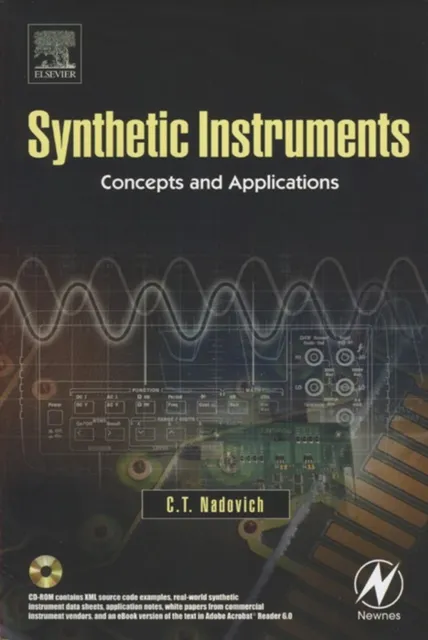
Synthetic Instruments: Concepts and Applications

The Evolution of Electronic Instruments
The way electronic instruments are built is changing in a deeply fundamental way. It is making an evolutionary leap to a new method of design that is being called synthetic instruments. This new method promises to be the most significant advance in electronic test and instrumentation since the introduction of automated test equipment (ATE). The switch to synthetic instruments is beginning now, and it will profoundly affect all test and measurement equipment that will be developed in the future.
What Are Synthetic Instruments?
Synthetic instruments are like ordinary instruments in that they are specific to a particular measurement or test. They might be a voltmeter that measures voltage, or a spectrum analyzer that measures spectra. The key, defining difference is this: synthetic instruments are implemented purely in software that runs on general purpose, non-specific measurement hardware with a high speed A/D and D/A at its core. In a synthetic instrument, the software is specific; the hardware is generic. Therefore, the "personality" of a synthetic instrument can be changed in an instant. A voltmeter may be a spectrum analyzer a few seconds later, and then become a power meter, or network analyzer, or oscilloscope. Totally different instruments are implemented on the same hardware and can be switched back and forth in the blink of an eye.
About the Book
This book explains the basics of synthetic instrumentation for the many people that will need to quickly learn about this revolutionary way to design test equipment. This book attempts to demystify the topic, cutting through commercial hype, and obscure, vague jargon, to get to the heart of the technique. It reveals the important basic underlying concepts, showing people how the synthetic instrument design approach, properly executed, is so effective in creating instrumentation that outperforms traditional approaches to T&M and ATE being used today.
- provides an overview and complete introduction to this revolutionary new technology
- enables equipment designers and manufacturers to produce vastly more functional and flexible instrumentation; it’s not your father’s multimeter!