$39.99
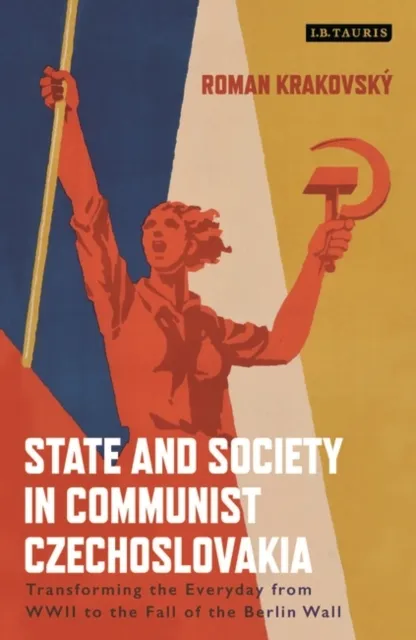
State and Society in Communist Czechoslovakia
Transforming the Everyday from WWII to the Fall of the Berlin Wall

Across central and eastern Europe after World War II, the newly established communist regimes promised a drastic social revolution that would transform the world at great pace and pave the way to a socialist future.
Although many aspects of this utopian project are well known - such as fast-paced industrialisation, collectivisation and urbanisation - the regimes even sought to transform the ways in which their citizens interacted with each other and the world around them. Using a unique analytical model based on an amalgam of anthropology, sociology, history and extensive archival research, award-winning scholar Roman Krakovsky here considers the Czechoslovakian attempt to reinvent the world - time and space included - in this all-encompassing way.
Ranging from WWII to the fall of the Berlin Wall, his innovative analysis variously considers the impact of Stakhanovism, the impossible-to-achieve production targets intended to assert socialism's future potential; the attempt to replace Sunday's Christian attributes with socialist ones; and the profound changes brought about to the public and private spheres, including the culture of informing and the ways this was circumvented.
Across a wide range of case studies Krakovsky demonstrates both the far-reaching extent of the communist vision and the inherent flaws and contradictions that gradually destabilised it. This in-depth perspective is vital reading for all scholars of twentieth century history and politics.