£8.99
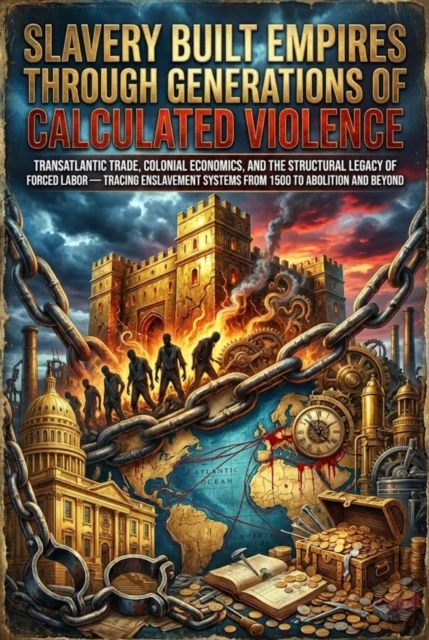
Slavery Built Empires Through Generations of Calculated Violence
Transatlantic Trade, Colonial Economics, and the Structural Legacy of Forced Labor - Tracing Enslavement Systems From 1500 to Abolition and Beyond

Slavery in the Early Modern Era
Slavery in the early modern era was not incidental to colonial expansion-it was the foundation. European empires extracted wealth from the Americas through systematically enslaved labor. African societies faced demographic collapse and political upheaval through centuries of capture and sale. Enslaved people endured Middle Passage horrors, plantation brutality, and legal erasure of personhood while maintaining family bonds, cultural memory, and resistance strategies that would eventually dismantle the system.
Structural Architecture of Slavery
This book traces the structural architecture of slavery across three continents. It examines how Portuguese, Spanish, Dutch, French, and British traders established coastal fortresses and negotiated with African kingdoms some coerced, some complicit to supply human captives. It follows forced migration routes carrying twelve million people across the Atlantic, documenting mortality rates, shipboard rebellions, and the calculated economics of human cargo.