$74.99
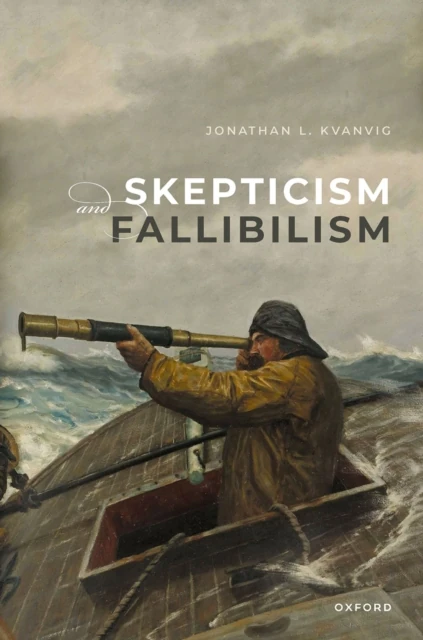
Skepticism and Fallibilism

Responses to Skepticism
There are two common responses to skepticism, the epistemological claim that knowledge is at least non-existent and perhaps also unachievable, and both are to be avoided. So Jonathan Kvanvig argues here.
The first response is to succumb to it, trying then to find some adequate basis for life that foregoes presumptions of knowledge. The second response is dismissive, viewing it as an overwrought, hyperbolic response to human limitations, so wrongheaded that nothing beyond a laconic response is needed before returning to important philosophical tasks.
Avoiding Responses to Skepticism
Avoiding these responses requires theory development on the part of skepticism and a way of characterizing sensitive fallibilism in contrast to complacent versions of it. These two tasks take up the majority of the chapters, several of which show how theory development on behalf of the skeptic needs to proceed.
The Skeptical Ideal and Defeasible Reasoning
The hardest part of this project is to characterize the skeptical ideal for matters that we investigate through the use of defeasible reasoning, where the idea of finding an infallibilist standard looks impossible. In spite of this appearance, it is possible to characterize this ideal in terms of reasoning that puts one in full control over the possibility of error.
Characterizing Fallibilism
The other task involves characterizing fallibilism in terms of this notion of full control over the possibilities of error, and then developing a version of this view that doesn''t require such full control while at the same time acknowledging, predicting, and explaining how and why such full control appears whenever the language of knowledge is used. The result is an approximationist version of fallibilism that acknowledges that our knowledge is never ideal but is nonetheless close enough to the ideal to be present.