$116.99
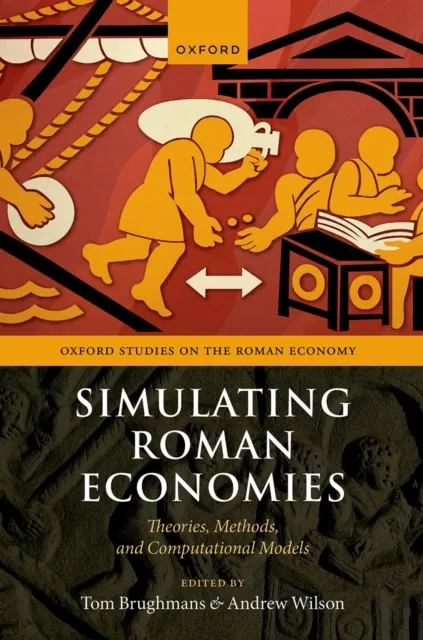
Simulating Roman Economies
Theories, Methods, and Computational Models

Introduction
The use of formal modelling and computational simulation in studies of the Roman economy has become more common over the last decade. But detailed critical evaluations of this innovative approach are still missing and much needed.
Insights and Enhancements
What kinds of insights about the Roman economy can it lead to that could not have been obtained through more established approaches, and how do simulation methods constructively enhance research processes in Roman Studies?
Volume Overview
This edited volume addresses this need through critical discussion and convincing examples. It presents the Roman economy as a highly complex system, traditionally studied through critical examinations of material and textual sources, and understood through a wealth of diverging theories.
Role of Simulation
A key contribution of simulation lies in its ability to formally represent diverse theories of Roman economic phenomena, and test them against empirical evidence. Critical simulation studies rely on collaboration across Roman data, theory, and method specialisms, and can constructively enhance multivocality of theoretical debates of the Roman economy.
Examples of Simulation Studies
This potential is illustrated, avoiding computational and mathematical language, through simulation studies of a wealth of Roman economic phenomena: from maritime trade and terrestrial transport infrastructures, through the economic impacts of the Antonine Plague and demography, to local cult economies and grain trade.
Goals and Impact
Through these examples and discussions, this volume aims to provide the common ground, guidance, and inspiration needed to make simulation methods part of the tools of the trade in Roman Studies, and to allow them to make constructive contributions to our understanding of the Roman economy.