$63.99
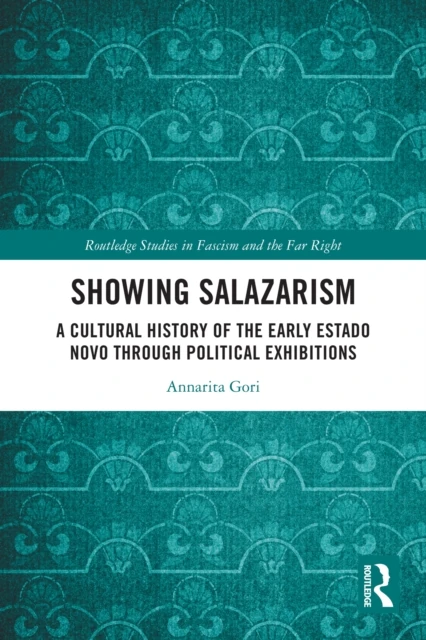
Showing Salazarism
A Cultural History of the Early Estado Novo through Political Exhibitions

Introduction
Drawing on Jeffrey Schnapp's conceptual framework, this book examines political exhibitions organised by the Portuguese Estado Novo between 1934 and 1940 as spaces where regimes manipulated national history to legitimise their authority, crafting myths of origin and narratives of national pride.
The Portuguese Estado Novo invested heavily in political exhibitions to consolidate its power and project a favourable image abroad, making them a key instrument of propaganda and cultural diplomacy. By analysing national exhibitions, as well as Portugal's participation in the international fairs in Paris (1937), New York, and San Francisco (1939), this book explores how the regime's efforts to construct a shared past reinforced its consolidation and provided a unifying foundation for its internal factions.
It also examines how Salazarism, navigating both missteps and successes, designed its pavilions to develop visual propaganda and a teleological narrative aimed at fostering loyalty and devotion to its core values. By bridging the local and the global, Showing Salazarism demonstrates how the Estado Novo leveraged these events to forge alliances, influence international audiences, and strengthen ties with the Portuguese diaspora — embedding its cultural strategy within the broader framework of the interwar period.
This volume fills a critical gap in the historiography of Salazar's Portugal while offering fresh insights into the study of political exhibitions and will be of value to students and scholars alike interested in the studies of fascism and European history.