£299.99
Sheep & Goat Meat Production & Processing

Introduction
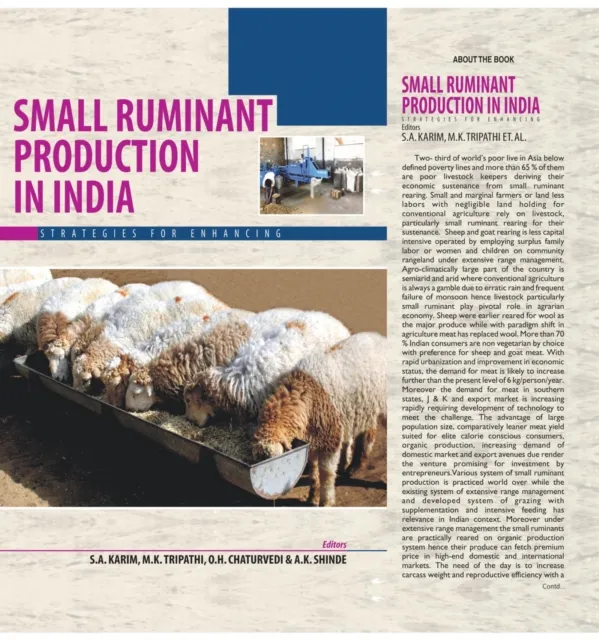
Sheep and goats contribute nearly one-fourth to the total meat production in the country. They are considered as future food animals under climate change scenario. Majority of sheep and goat flocks in the tropical countries are raised on natural grazing resources. These resources are gradually denuding both in yield and quality and compromising the meat production.
Challenges and Trends
Further feed scarcity from grazing lands is transforming aged old traditional system to semi-intensive and intensive ones. The demand for small ruminant meat is increasing rapidly both in domestic and international markets, while relatively poor production from available animals, feed, and infrastructure is reflected in inflating meat prices.
Production Strategies
To bridge the gap between demand and supply, large-scale specialized sheep and goat production systems, which are more conducive to adopting improved production technologies like prolificacy, higher feed efficiency, and accelerated production, are some of the pertinent and quantifiable approaches. Strategies should also focus on small-scale, market-oriented, intensive production systems based on existing systems and agro-ecologies in certain pockets, where innovative breeding strategies, breed selection, feed and feeding systems, housing, health, and management may also be considered.
Consumer Preferences and Product Development
The demand for healthy meat and meat products is growing among health-conscious people, creating favorable conditions for organic and lean meat produced in hygienic premises. This demand will further increase with rising incidences of cardiovascular diseases, obesity, hypertension, etc. Designer meat products can be promoted as healthy food through fiber, pre- and robotic fortification, sodium and fat reduction, and nutraceutical enrichment.
Packaging and Waste Utilization
To improve shelf life, recent techniques such as modified atmosphere packaging, vacuum packaging, edible packaging, active, and smart packaging are being used. In addition to meat processing, efficient utilization of slaughterhouse by-products is equally important to minimize environmental pollution and promote profitable meat trade.
Quality Control and Market Development
Issues like adulteration of meat, drug and pesticide residues, microbial contamination, etc., are significant in the meat sector. Stringent quality control measures and enforcement of existing acts and regulations are necessary to assess the wholesomeness of meat and meat products. There is an urgent need to develop marketing intelligence and transform the marketing system of sheep, goats, and meat.
Conclusion
This book provides a comprehensive account of the current status of sheep and goat meat production and processing practices, along with knowledge and technologies for improving designer and hygienic meat and meat products. It aims to assist students, researchers, academicians, policymakers, and planners. The insights offered will have long-term benefits, promoting development in both the meat sector and R&D institutions.