$118.99
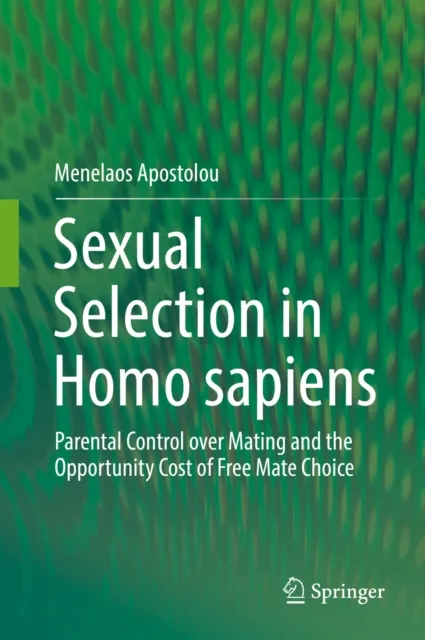
Sexual Selection in Homo sapiens
Parental Control over Mating and the Opportunity Cost of Free Mate Choice

Introduction
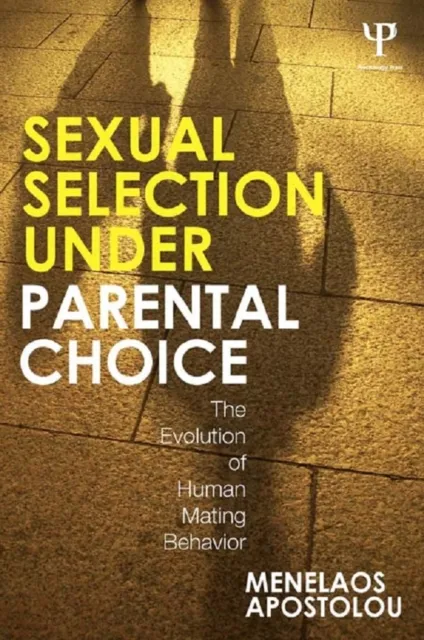
The present book aims to examine how sexual selection works in the human species. Almost all scholarly effort focuses on sexual selection in non-human species and extrapolates the findings to the human one. However, human mating has a unique pattern not found in any other species, namely parental influence over mate choice. Across preindustrial societies, the typical pattern of long-term mating is arranged marriage, where parents choose spouses for their children. By doing so, parents effectively become a sexual selection force. Traits that enhance an individual’s chance to be selected as a son- or a daughter-in-law confer important reproductive advantages to those who are endowed with them, increasing in frequency in the population.
Parental Choice
The author has coined the term parental choice to describe the sexual selection force that arises from parental control over mating. He synthesizes extensive theoretical and empirical work in order to understand and model this force. The aim is to understand which factors give rise to parental choice and to combine these insights into constructing a more formal model. It also aims to further examine whether the predictions of the model fit the patterns of mating found across different types of human societies, and how the model can be used to understand the evolution of behavioral traits involved in mating.
Conclusion
By synthesizing the various arguments put forward and published across the literature, the book offers a comprehensive argument and overview of an aspect of sexual selection unique to our species. Furthermore, the book revises and extends previously made arguments and models, while it provides useful insights on how the proposed revision of sexual selection theory can enable us to understand a wide range of human behavioral phenomena. It should be key reading for those interested in studying sexual selection in general and in the Homo sapiens species in particular.