$69.99
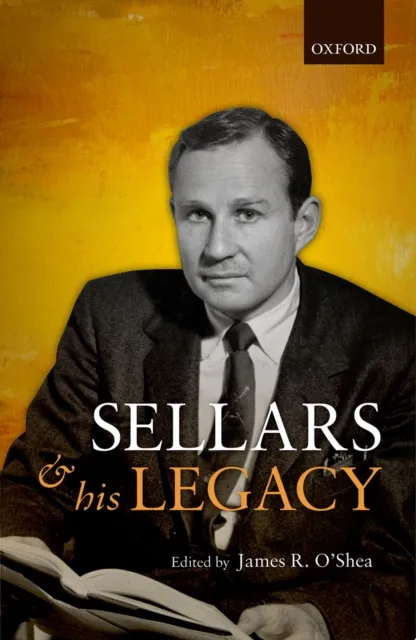
Sellars and his Legacy

Introduction
This collection of new essays on the systematic thought and intellectual legacy of the American philosopher Wilfrid Sellars (1912-1989) comes at a time when Sellars's influence on contemporary debates about mind, meaning, knowledge, and metaphysics has never been greater.
Sellars's Importance
Sellars was among the most important philosophers of the twentieth century, and many of his central ideas have become philosophical stock-in-trade: for example, his conceptions of the myth of the given, the logical space of reasons, and the clash between the manifest and scientific images of man-in-the-world.
Contributors and Topics
This volume features well-known contemporary philosophers who have been strongly influenced by Sellars—Robert Brandom, Willem deVries, Robert Kraut, Rebecca Kukla, Mark Lance, John McDowell, Ruth Millikan, James O'Shea, David Rosenthal, Johanna Seibt, and Michael Williams—critically examining the groundbreaking ideas by means of which Sellars sought to integrate our thought, perception, and rational agency within a naturalistic outlook on reality.
Key Topics
Topics include Sellars's inferentialist semantics and normative functionalist view of the mind; his attempted reconciliations of internalist and externalist aspects of thought, meaning, and knowledge; his novel nominalist account of abstract entities; and a speculative pure process metaphysics of consciousness.
Dialogue and Perspectives
Of particular interest is how this volume exhibits the ongoing fruitful dialogue between so-called left-wing Sellarsians, who stress Sellars's various Kantian and pragmatist defenses of the irreducibility of normativity and rationality within the space of reasons, and right-wing Sellarsians who defend the plausibility of Sellars's highly ambitious and systematic scientific naturalism.


