$132.99
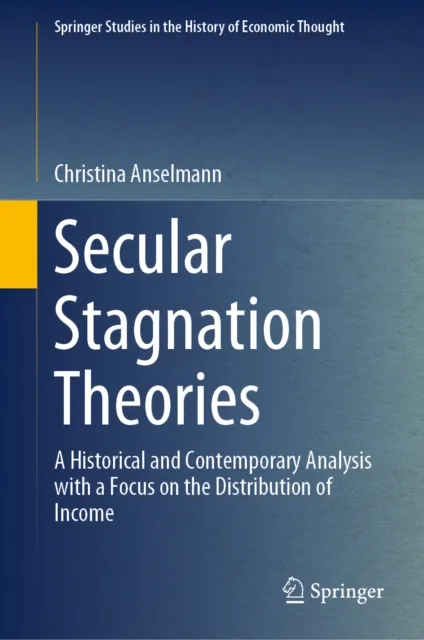
Secular Stagnation Theories
A Historical and Contemporary Analysis with a Focus on the Distribution of Income

Introduction
In light of weak economic performances and rising income disparities across the developed world during the past decades, this book provides a comprehensive overview of secular stagnation theories in the history of economic thought and examines the role of income distribution in various stagnation hypotheses. By offering a historical perspective, from the classical economists to the most recent stagnation debate of the early twenty-first century, the author shows that most stagnation theories were developed in periods of high and/or rising income disparities.
Historical Perspective and Key Theories
Eventually, it was Josef Steindl, one of the least recognized stagnationists in the history of economic thought, who put the distribution of income at the heart of his stagnation theory. While Josef Steindl focused on the nexus between the functional distribution of income and economic growth, this book includes the personal distribution of income in a Kaleckian-Steindlian model of economic growth and stagnation.
Model and Economic Dynamics
In the model presented, the nexus between economic growth and the distribution of income is a priori uncertain, depending on the type of economic shock and the specific economic circumstances. The author also discusses various empirically oriented policy implications aimed at fostering both economic growth and a more equal distribution of income.
Target Audience
This book appeals to scholars in economics and the history of economic thought interested in economic growth, secular stagnation, and income distribution.