$45.99
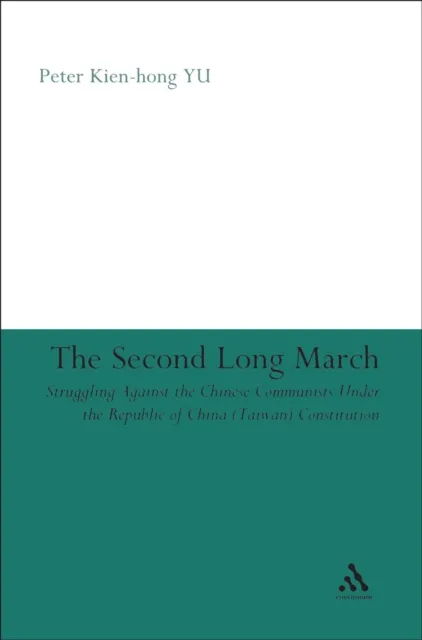
Second Long March
Struggling Against the Chinese Communists Under the Republic of China (Taiwan) Constitution

Work Overview
This work, written by an expert in the politics of Mainland China and Taiwan, looks at the role the Constitution of the Republic of China has played in the development of Taiwan since 1949 and its potential influence on the People's Republic of China.
The Long Marches and Political Transformation
The Chinese Communists conducted the first long march for the sake of the majority of Chinese people, with the victory of MAO Zedong. In the second long march, CHIANG Kai-shek and his successors tried to convert the Chinese mainland from a Communist, totalitarian system, into a democratic, prosperous one by relying on the spirit of the Republic of China (ROC) constitution and by setting itself as a good example, in gradually guaranteeing freedom and democracy. Needless to say, this march is long and difficult.
The Second Long March and Its Implications
The Second Long March challenges other models and theories on the study of the relationship between the ROC (Taiwan area) and mainland China or the People's Republic of China (PRC) since China became politically (as opposed to legally) divided in December 1949. Arguably, it is the ROC Constitution that has helped ROC citizens to live in a non-Communist or anti-Communist political system. Actively promoting democracy and freedom on the Chinese mainland (neidi) can further guarantee the Taiwan area's survival.
Target Audience and Scholarship
The book will provide valuable scholarship of interest to anyone researching the political history of China and its prospects for democratization.