$224.99
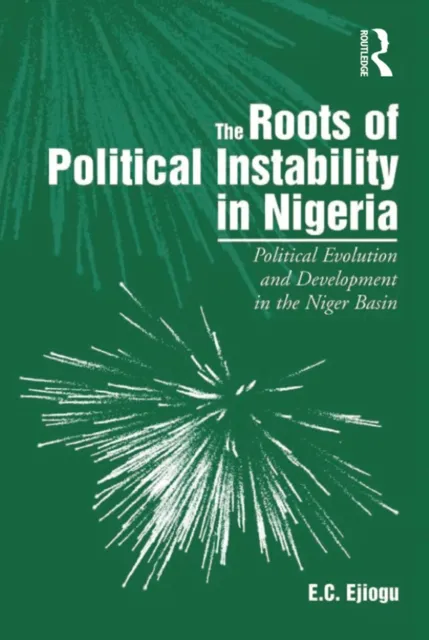
Roots of Political Instability in Nigeria
Political Evolution and Development in the Niger Basin

Introduction
The constant drumbeat of headlines about Darfur, Zimbabwe, Sudan, Somalia, as well as the other states in Africa that are beleaguered by political instability have made the causes of failed states and intra-state political conflicts a major issue, both academic and practical.
Framework and Analysis
Using Harry Eckstein and Ted R. Gurr's congruence-consonance theoretical framework of regime classification, E.C. Ejiogu examines the internal variations of society evident in the Nigerian state to explain why the country experiences political conflict and instability.
Significance of the Study
The first time this theoretical framework has been applied to an African country; E.C. Ejiogu offers a balanced and interdisciplinary analysis of the evolution in the Nigerian political system and the role played by evolved social traits in society.
Key Themes
Exploring themes such as colonial rule and legacies, economic development, political authority and religion, Ejiogu insists that it is critical to examine Africa's diverse nationalities in terms of their geography, social, economic and authority patterns as critical elements that are disregarded in accounts of their political development.
Conclusion
At a time when the question of state building in Africa is still unresolved, this timely book is a major contribution to the literature on transition processes in African politics and is particularly relevant to scholars and policy makers wanting to grapple with the issues associated with Africa's political disorder and the other social problems it spawns.