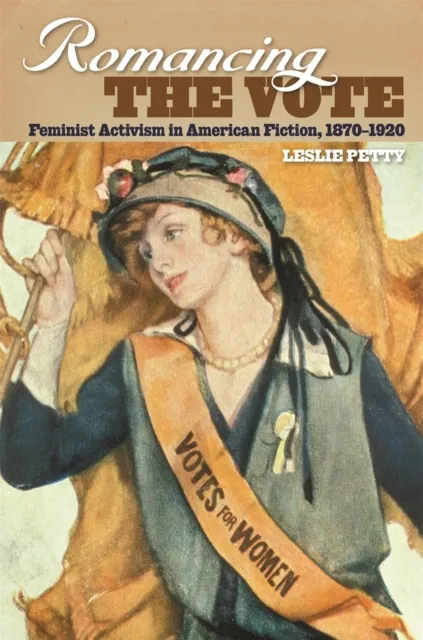
Romancing the Vote

$67.99

Taxes may apply at checkout.

Romancing the Vote

Feminist Activism in American Fiction, 1870-1920

Literature: history and criticism Literary studies: general Literary studies: c 1800 to c 1900 Literary studies: c 1900 to c 2000 Feminism and feminist theory Gender studies: women and girls Human rights, civil rights Civics and citizenship

Author: Leslie Petty

Dinosaur mascot

Language: English

Published by: University of Georgia Press

Published on: 15th August 2011

Format: LCP-protected ePub

ISBN: 9780820342894


As the nineteenth century progressed into the twentieth, novels about politically active women became increasingly common. Until now, however, no one has studied this body of writing as a distinct tradition in American literature.

In Romancing the Vote, Leslie Petty recovers this tradition and also examines how the fiction written about the women's rights and related movements contributed to the creation and continued vitality of those movements.

Petty examines the novels as paradigms of feminist activism and reform communities and elucidates how they, whether wittingly or not, model ways to create similar communities in the real world. She demonstrates how the narratives provide insight into the hopes and anxieties surrounding some of the most important political movements in American history and how they encapsulate the movements' paradoxical blend of progressive and conservative ideologies.

The major works discussed are Elizabeth Boynton Harbert's Out of Her Sphere (1871), Lillie Devereux Blake's Fettered for Life (1874), Henry James's The Bostonians (1886), Frances Ellen Watkins Harper's Iola Leroy (1892), Hamlin Garland's A Spoil of Office (1892), Marjorie Shuler's For Rent-One Pedestal (1917), Elizabeth Jordan's edited volume The Sturdy Oak (1917), and Oreola Williams Haskell's Banner Bearers: Tales of the Suffrage Campaigns (1920).

Although these works discredit many traditional notions about gender and inspire their readers to seek fairness and equality for many American women, they often simultaneously perpetuate discriminatory ideas about other marginalized groups. They not only privilege the experiences of white women but also rely on widespread anxieties about racial and ethnic minorities to demonstrate the need for gender reform. By focusing on such tensions between conventional and unconventional ideas about gender, race, and class, Petty shows how the fiction of this period helps to situate first-wave feminism within a larger historical and cultural context.

Show moreShow less