$17.49
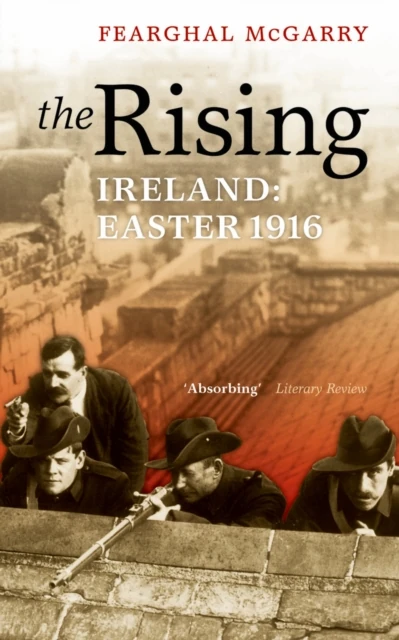
Rising (New Edition)
Ireland: Easter 1916

Introduction
The Easter Rising of 1916 not only destroyed much of the centre of Dublin -- it changed the course of Irish history. But why did it happen? What was the role of ordinary people in this extraordinary event? What motivated them and what were their aims? These basic questions continue to divide historians of modern Ireland.
The Rising and Its Perspectives
The Rising is the story of Easter 1916 from the perspective of those who made it, focusing on the experiences of rank and file revolutionaries. Fearghal McGarry makes use of a unique source that has only recently seen the light of day -- a collection of over 1,700 eye-witness statements detailing the political activities of members of Sinn Féin and militant groups such as the Irish Republican Brotherhood.
Significance of the Collection
This collection represents one of the richest and most comprehensive oral history archives devoted to any modern revolution, providing new insights on almost every aspect of this seminal period. The Rising shows how people from ordinary backgrounds became politicized and involved in the struggle for Irish independence.
Motives and Aftermath
McGarry illuminates their motives, concerns, and aspirations, highlighting the importance of the Great War as a catalyst for the uprising. He concludes by exploring the Rising's revolutionary aftermath, which in time saw the creation of the independent state we see today.
Legacy and Commemorations
This edition includes a new preface which reflects on the continuing importance of the Easter Rising as a symbol of Irish nationhood, and which looks at the 2016 centenary commemorations in both Ireland and the UK within the wider context of the Decade of Centenaries.