$152.99
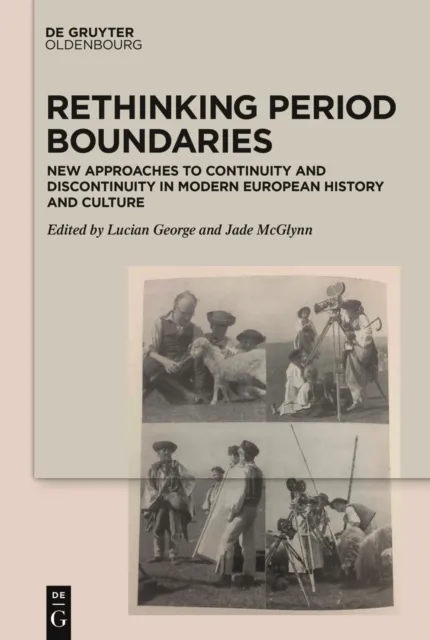
Rethinking Period Boundaries
New Approaches to Continuity and Discontinuity in Modern European History and Culture

Periodization and Historical Interpretation
Periodization is an ever-present feature of the grammar of history-writing. As with all grammatical rules, the order it imposes can structure but also stifle historical interpretations. Though few historians consider their period boundaries as anything more than useful guidelines, heuristic artifice all too easily congeals into immovable structure, blinkering the historical gaze.
Challenging and Rethinking Period Boundaries
In this cross-disciplinary volume, an international group of historians and cultural scholars considers different ways in which accepted period boundaries in modern European history and cultural studies can be challenged and rethought. Alongside a theoretical introduction and epilogue, the volume contains seven case studies exploring hitherto under-researched continuities and discontinuities in the social, cultural, intellectual, literary, labour and art history of 19th- and 20th-century Europe, with a particular focus on the continent’s East. Topics covered include French anti-communism, peasant memories of serfdom, cosmopolitan art in a nationalist age, the communist takeover of Poland, Russian literary history, and national day traditions in East-Central Europe. To problematize period boundaries, the chapters in this volume adopt the perspective of social groups that standard periodization schemes have ignored; shine a light on "awkward" actors who have appeared out of step with canonical understandings of their period; consider how historical actors themselves divide up history and how this informs historical practice; and explore the difficulties that the non-synchronicity of different historical processes can pose for periodization.