£80.99
Rethinking Lessing's Laocoon
Antiquity, Enlightenment, and the 'Limits' of Painting and Poetry

Introduction
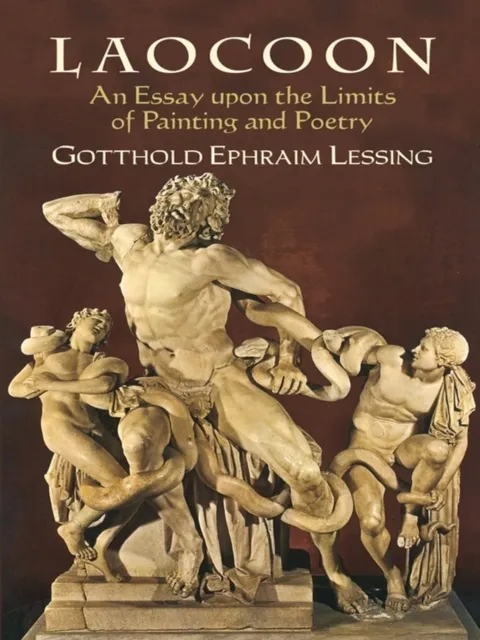
Gotthold Ephraim Lessing first published Laokoon, oder über die Grenzen der Mahlerey und Poesie (Laocoon, or on the Limits of Painting and Poetry) in 1766. Over the last 250 years, Lessing's essay has exerted an incalculable influence on western critical thinking. Not only has it directed the history of post-Enlightenment aesthetics, it has also shaped the very practices of poetry and painting in a myriad of different ways.
Anthology and Critical Perspectives
In this anthology of specially commissioned chapters — comprising the first ever edited book on the Laocoon in English — a range of leading critical voices has been brought together to reassess Lessing's essay on its 250th anniversary. Combining perspectives from multiple disciplines (including classics, intellectual history, philosophy, aesthetics, media studies, comparative literature, and art history), the book explores the Laocoon from a plethora of critical angles.
Themes and Analysis
Chapters discuss Lessing's interpretation of ancient art and poetry, the cultural backdrops of the eighteenth century, and the validity of the Laocoon's observations in the fields of aesthetics, semiotics, and philosophy. The volume shows how the Laocoon exploits Greek and Roman models to sketch the proper spatial and temporal limits (Grenzen) of what Lessing called poetry and painting; at the same time it demonstrates how Lessing's essay is embedded within Enlightenment theories of art, perception, and historical interpretation, as well as within nascent eighteenth-century ideas about the scientific study of Classical antiquity (Altertumswissenschaft).
Legacy and Cultural Significance
To engage critically with the Laocoon, and to make sense of its legacy over the last 250 years, consequently involves excavating various classical presences: by looking back to the Graeco-Roman past, the volume demonstrates, Lessing forged a whole new tradition of modern aesthetics.