$212.99
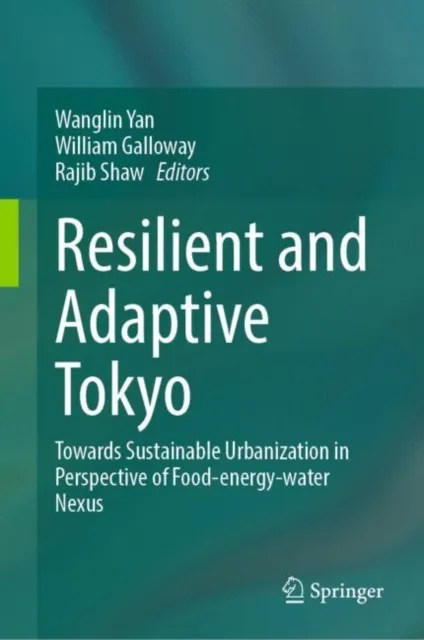
Resilient and Adaptive Tokyo
Towards Sustainable Urbanization in Perspective of Food-energy-water Nexus

Introduction
Our cities, and the systems that support them, have not been designed to address the FWE nexus. There exist gaps in awareness of the role and impacts of climate change. Improving communication among stakeholders with the support of scientific evidence is the key to narrowing the gaps.
Approach and Focus
This book approached this issue with a multidisciplinary and transdisciplinary moveable nexus approach through the lens of FEW nexus under the project of the Sustainable Urbanization Global Initiative of Belmont Forum. It presents a collection of evidence/science-based planning decisions and participatory practices by using Tokyo as the focal area.
Content and Visualization
It visualizes the stock and flow of the Food-Water-Energy (FEW) supporting the world’s largest metropolitan area, explores how the actors have worked together to secure the resilience and sustainability of resources, and demonstrates the potential of resources in making the city adaptive to climatic and social changes.
Intended Audience
It is designed for researchers in urbanization, nexus research, urban design research, environment, disaster risk reduction, and climate change studies, and can be used as a textbook for university courses. It is also a useful tool for practitioners and policymakers in applying collective knowledge to policy and decision-making.