£109.50
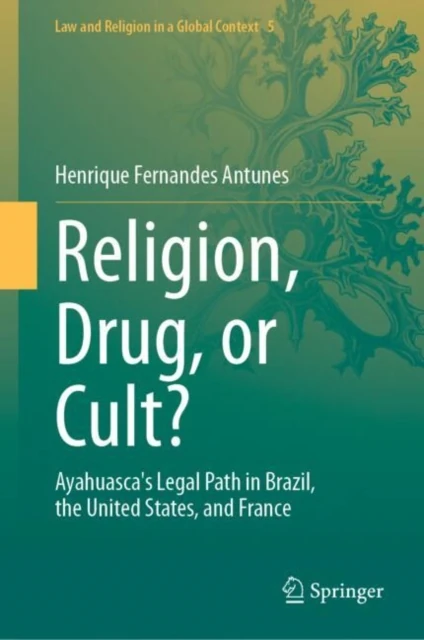
Religion, Drug, or Cult?
Ayahuasca's Legal Path in Brazil, the United States, and France

Introduction
This book explores the emergence of the religious use of ayahuasca as a subject of public interest and state intervention in Brazil, the United States, and France.
Brazil
In Brazil, since the 1980s, ayahuasca use has been permitted by the National Council on Drug Policies exclusively for religious purposes. In the late 2000s, public policies shifted from drug control to cultural heritage, following demands by groups from Acre for recognition of their practices as intangible heritage.
United States
In the United States, two Brazilian religions – União do Vegetal (UDV) and Santo Daime – as well as two non-Christian churches – the Church of the Eagle and the Condor and the Church of the Celestial Heart – secured the legal right to use ayahuasca. Through legal battles and settlements, they obtained exemptions from the Controlled Substances Act (CSA) under the Religious Freedom Restoration Act (RFRA).
France
In France, ayahuasca was banned in 2005, just three months after a Santo Daime group successfully appealed drug charges. Today, ayahuasca remains illegal; groups are often labeled as dangerous cults and seen as threats to French republican ideals.
Theoretical Framework
Inspired by the anthropology of secularism and the sociology of public problems, the book examines how terms like religion, cult, drug, hallucinogen, and cultural heritage are mobilized by various actors in public disputes to shape perceptions and influence policy. It draws on legal cases, public policies, legislation, academic literature, social media, institutional documents, and interviews with key figures involved in regulatory debates.
Central Thesis
The central thesis – ayahuasca as a lens to understand how states define religion and determine legitimate religious practice – offers fresh perspectives on the intersections of religious freedom, drug policy, and state authority. Bridging multiple disciplines, the book contributes to debates on law and religion, and to a deeper understanding of how democracies manage minority faiths, cultural rights, and the boundaries of state intervention.