$37.99
Refugee Economies
Forced Displacement and Development

Introduction
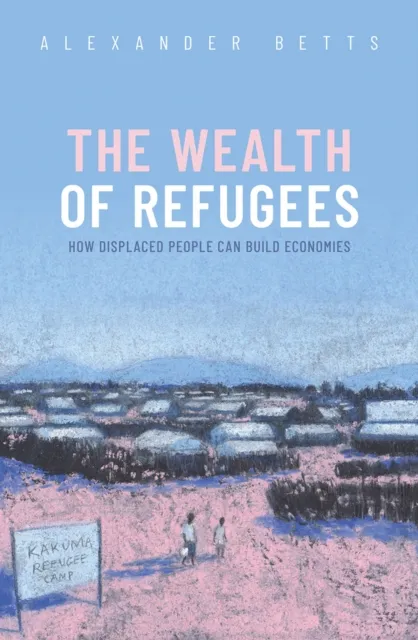
Refugees have rarely been studied by economists. Despite some pioneering research on the economic lives of refugees, there remains a lack of theory and empirical data through which to understand, and build upon, refugees' own engagement with markets. Yet, understanding these economic systems may hold the key to rethinking our entire approach to refugee assistance. If we can improve our knowledge of the resource allocation systems that shape refugees' lives and opportunities, then we may be able to understand the mechanisms through which these market-based systems can be made to work better and turn humanitarian challenges into sustainable opportunities.
Approach and Focus
This book adopts an inter-disciplinary approach, based on original qualitative and quantitative data on the economic life of refugees, in order to begin to build theory on the economic lives of refugees. It focuses on the case of Uganda because it represents a relatively positive case. Unlike other governments in the region, it has taken the positive step to allow refugees the right to work and a significant degree of freedom of movement through its so-called Self-Reliance Strategy. This allows a unique opportunity to explore what is possible when refugees have basic economic freedoms.
Findings and Implications
The book shows that refugees have complex and varied economic lives, often being highly entrepreneurial and connected to the global economy. The implications are simple but profound: far from being an inevitable burden, refugees have the capacity to help themselves and contribute to their host societies — if we let them.