£23.99
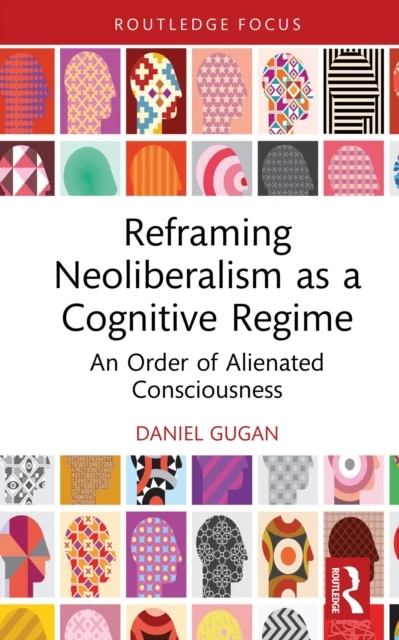
Reframing Neoliberalism as a Cognitive Regime
An Order of Alienated Consciousness

Introduction
This volume provides a new exploration of the complex phenomenon of neoliberalism from a unique perspective, casting it as our contemporary “collective consciousness” and arguing for its interpretation not as a political ideology, but as a multifaceted cognitive system.
Formation and Structure
It maps out the formation processes and structural buildup of these systems by elaborating first on a certain model of individual cognition, then scaling it up to the societal level. This collective cognitive model then provides the foundation for in-depth analysis of “cognitive regimes,” which are understood as the different examples of culturally defined and externally structured collective consciousnesses.
Attributes and Framework
Several attributes and their different dynamics are explored and organized into a general framework, such that a new and comprehensive understanding of the subject can be extracted.
Implications and Audience
It offers valuable analysis of what this “cognitivist” approach to neoliberalism can provide for reimagining our future in a world struggling with ecological, economic, demographic, and climatic degradation, and what lessons can be learned for an era overshadowed by a potential climatic collapse.
Academics interested in the expansion of the “critique of neoliberalism” discourse to the socio-cognitive field, looking for some novelties in the well-established academic literature around this subject, would greatly benefit from this text. With its clear and concise format, it is also of interest to motivated readers from outside academia.