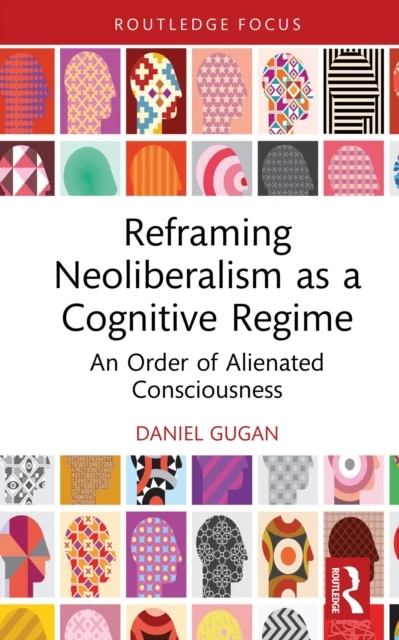
Following the 2007–2008 global financial crisis, a number of prominent academics, journalists, and activists were quick to pronounce the demise of neoliberal capitalism and governance. This rather optimistic prediction, however, underestimated the extent to which neoliberalism has shaped the 21st-century world order and become entrenched in our sociopolitical and cognitive fabric. Indeed, 11 years after the crisis, and in spite of the significant levels of socioeconomic inequality, psychological distress, and environmental destruction generated by neoliberal policies and corresponding business and cultural practices, the ideological hegemony of neoliberalism has not been supplanted, nor has it really faced any serious unsettling. How, then, has neoliberalism inflected and shaped our “common-sense” understandings of what is politically, economically, and culturally viable? To help answer this question, this book combines leading theories from sociology, media-communication research, developmental psychology, and cognitive science, and draws on primary evidence from a unique mix of ethnographic, survey, and experimental studies – of young people’s leisure practices and educational experiences, of young adults’ political socialisation processes in relation to exposure to social networking sites, and of the effects of commercial media viewing on material values and support for social welfare. In doing so, it provides a nuanced and robustly empirically tested account of how the conscious and non-conscious cognitive dimensions of people’s subjectivities and everyday social practices become interpellated through and reproductive of neoliberal ideology. As such, this book will appeal to scholars across the social and behavioural sciences with interests in neoliberalism, political engagement, enculturation, social reproduction, and media effects.
We use essential cookies so your saved books and account features work smoothly. Optional cookies help us understand how readers use the shop so we can improve it.