$105.99
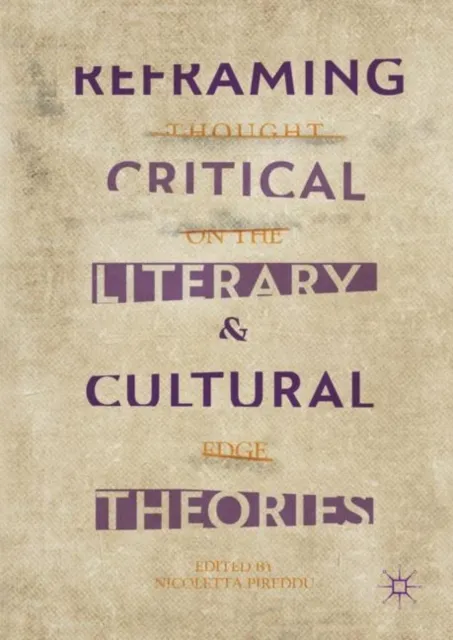
Reframing Critical, Literary, and Cultural Theories
Thought on the Edge

Debate on the Death of Theory and Post-Theoretical Condition
This book participates in the ongoing debate about the alleged “death of theory” and the current post-theoretical condition, arguing that the “finitude” of theoretical projects does not mean “end”, but rather contingency and transformation of thinking, beyond irreconcilable doctrines. Contributors from different cultural and scholarly backgrounds and based in three different continents propose new areas of investigation and interpretive possibilities, reopening dialogues with past and present discourses from a plurality of perspectives and locations.
Reassessing Critique, Theory, and Literature
After a first section that reassesses the status and scopes of critique, theory, and literature, the book foregrounds new or neglected critical vocabulary, literary paradigms, and narrative patterns to reread texts at the intersection with other branches of the humanities—history, philosophy, religion, and pedagogy.
Exploring Geopolitical, Cultural, and Epistemological Domains
It then explores geopolitical, cultural, and epistemological domains that have been historically and ideologically overdetermined (such as postsocialist, postcolonial, and cosmopolitan spaces), recodifying them as unstable sites of both conflicts and convergences.
Boundaries as Zones of Contact and Exchange
By acknowledging the spatio-temporal and cultural delimitations of any intellectual practice, the book creates awareness of our own partiality and incompleteness, but treats boundaries as zones of contact, exchange, and conceptual mobility that promote crossings and connections.