$56.99
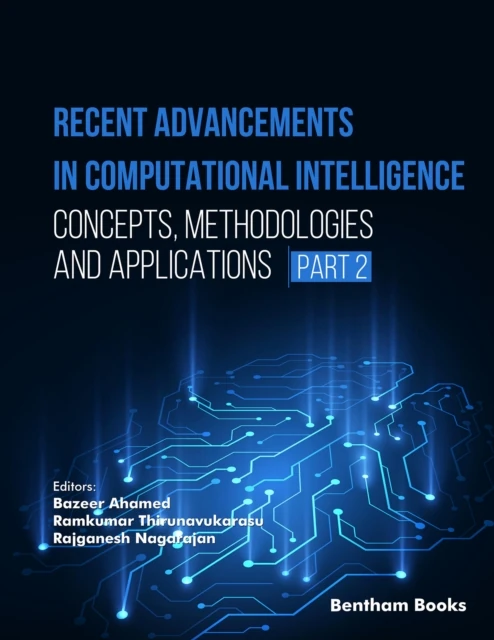
Recent Advancements in Computational Intelligence
Concepts, Methodologies and Applications (Part 2)

Recent Advancements in Computational Intelligence: Concepts, Methodologies and Applications (Part 2)
Explores cutting-edge developments in computational intelligence (CI), a dynamic field at the intersection of artificial intelligence, machine learning, and data science. Emphasising biologically inspired techniques such as neural networks, fuzzy logic, swarm intelligence, and evolutionary algorithms, the book demonstrates how CI solves real-world challenges involving uncertainty, ambiguity, and incomplete information. Aligned with Industry 4.0, it bridges theoretical foundations with practical applications across diverse domains, including healthcare, autonomous systems, cybersecurity, and smart computing.
Structured into thematic sections, the book covers Social Computing, High-Performance Computing, Network Science, Smart Computing, and Intelligent Communications. Key chapters explore deep learning for autonomous vehicles, AI-driven healthcare diagnostics, graph theory for cybersecurity, edge computing in IoT, and reinforcement learning for generative AI. Case studies highlight innovations such as myelin segmentation in pediatric MRI, personalised marketing AI, and secure password generation with multi-factor authentication. Contributions from global experts offer a balanced blend of theoretical rigour and applied research.
Key Features
Comprehensive coverage integrating CI concepts with emerging trends like generative AI and edge computing
Real-world case studies demonstrating CI's transformative potential in industry
An interdisciplinary approach connecting computer science, engineering, and healthcare
Practical methodologies for researchers and implementable strategies for practitioners
Target Readership
Researchers, academics, students and professionals in AI, computer science, and data engineering