$38.99
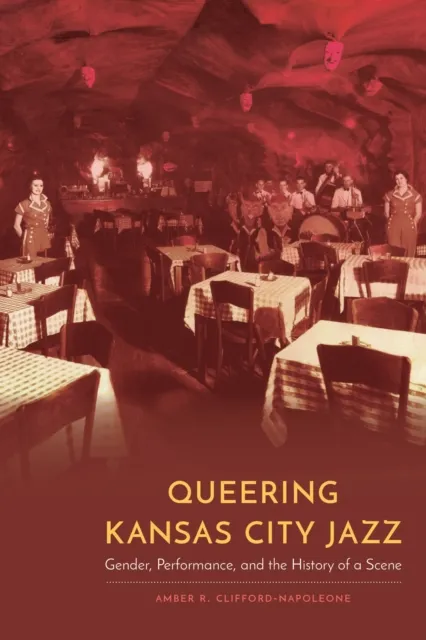
Queering Kansas City Jazz
Gender, Performance, and the History of a Scene

The Jazz Age and Kansas City
The Jazz Age, a phenomenon that shaped American leisure culture in the early twentieth century, coincided with the growth of Kansas City, Missouri, from frontier town to metropolitan city.
Queering Kansas City Jazz
Queering Kansas City Jazz supplements the grand narrative of jazz history by including queer identities in the citys history while framing the jazz-scene experience in terms of identity and space. Cabarets, gender impressionism clubs, and sites of sex tourism in Kansas City served as world-making spaces for those whose performance of identity transgressed hegemonic notions of gender, sexuality, race, and class.
Interdisciplinary Approach
Amber R. Clifford-Napoleone takes an interdisciplinary approach to provide a critical deconstruction of how the jazz scene offered a space for nonnormative gender practice and performance and acted as a site of contested identity and spatial territory.
Regional Cultural Shifts
Few books examine the changing ideas about gender in the turn-of-the-century Great Plains, under the false assumption that people in middle-American places experienced cultural shifts only as an aftershock of events on the coasts. This approach overlooks the regions contested territories, identities, and memories and fails to adequately explain the social and cultural disruptions experienced on the plains.
Kansas City as a Microcosm
Clifford-Napoleone rectifies this oversight and shows how Kansas City represents the complexity of the jazz scene in America as a microcosm of all the other people who made the culture, clubs, music, and cabarets of the age possible.


