$147.99
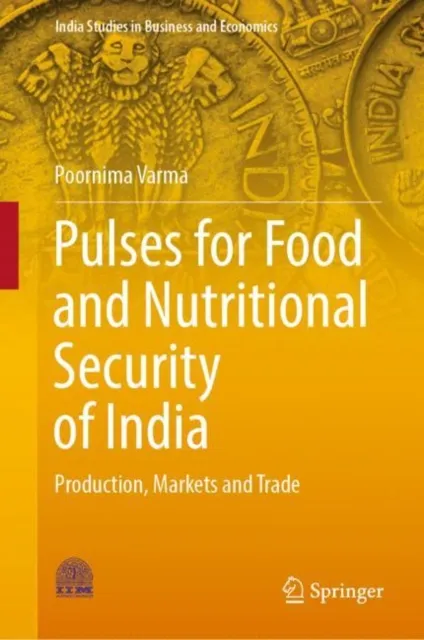
Pulses for Food and Nutritional Security of India
Production, Markets and Trade

Overview
This book provides an in-depth analysis of India’s pulses sector in terms of production, prices, markets, and trade. Pulses play a pivotal role in a developing country like India for all categories of people due to its rich protein content (double that of wheat and three times more than that of rice). Despite being an important crop from the point of view of food, nutrition, and environmental security, the focus of food security policies in developing countries has been more on wheat and rice production.
Analysis and Focus
This book analyses factors influencing the supply of pulses with a greater emphasis on government interventions such as minimum support price (MSP) and National Food Security Mission (NFSM), the effectiveness of MSP and factors influencing farmers’ access to MSP, the import dependency implications through a detailed import pricing behavior of major importers of major pulses. It investigates production, market dynamics, and trade implications related to two major pulses, chickpea and pigeonpea, produced by all pulse-producing States in India. Analysis of farmers' awareness of MSP and factors influencing access to MSP are undertaken through a comprehensive household survey from the States of Maharashtra, Karnataka, and Madhya Pradesh. Finally, the book analyses import implications and import pricing behaviour for all major pulses imported by India.
Target Audience
The book would be very useful for researchers working on the issues of agricultural production and food security, for agriculture and agri-business students, as well as for policy makers to understand the inherent dynamics in the pulses sector.