$63.99
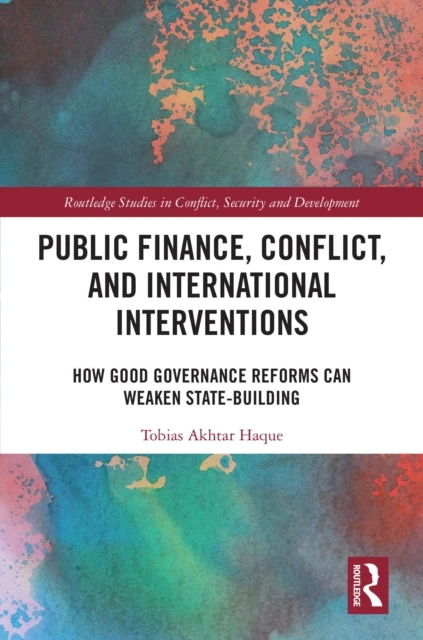
Public Finance, Conflict, and International Interventions
How Good Governance Reforms Can Weaken State-building

Overview
This book provides a critical analysis of the political and conflict impacts of “good governance” public finance reforms, showing how unintended distributional outcomes can undermine broader state‑building goals.
The international community expends enormous resources trying to build “good governance” institutions in countries emerging from war. By ensuring efficiency, increasing transparency, and enhancing public accountability in the use of public resources, the adoption of “good governance” institutions is assumed to support stability, peace, and sustainable economic growth. Such assumptions, however, have a limited empirical basis and obscure a more complex reality. Drawing from political science and institutional economics, and evidence from major state‑building interventions in Afghanistan, Timor‑Leste, and Solomon Islands, this book explores the impacts of technocratic “good governance” reforms in fragile environments. Through the lens of public finance reform, it illustrates how efforts to achieve efficiency and accountability, while often bringing important benefits, can also undercut the patronage channels that draw together powerful elites, thereby increasing conflict pressures and eroding prospects for sustainable peace. This book makes the case for a reconsideration of the “good governance” agenda and the appropriateness of its application in developing countries experiencing or at risk of war.
Target Audience
This book will be of interest to students of state‑building, global governance, political economy, development studies, and International Relations.